
What Can a Forestry Mulcher Actually Clear?
An honest breakdown of what a forestry mulcher can actually handle — and the stuff it can't. Tree diameters, vegetation types, stumps, invasives, and real limitations.
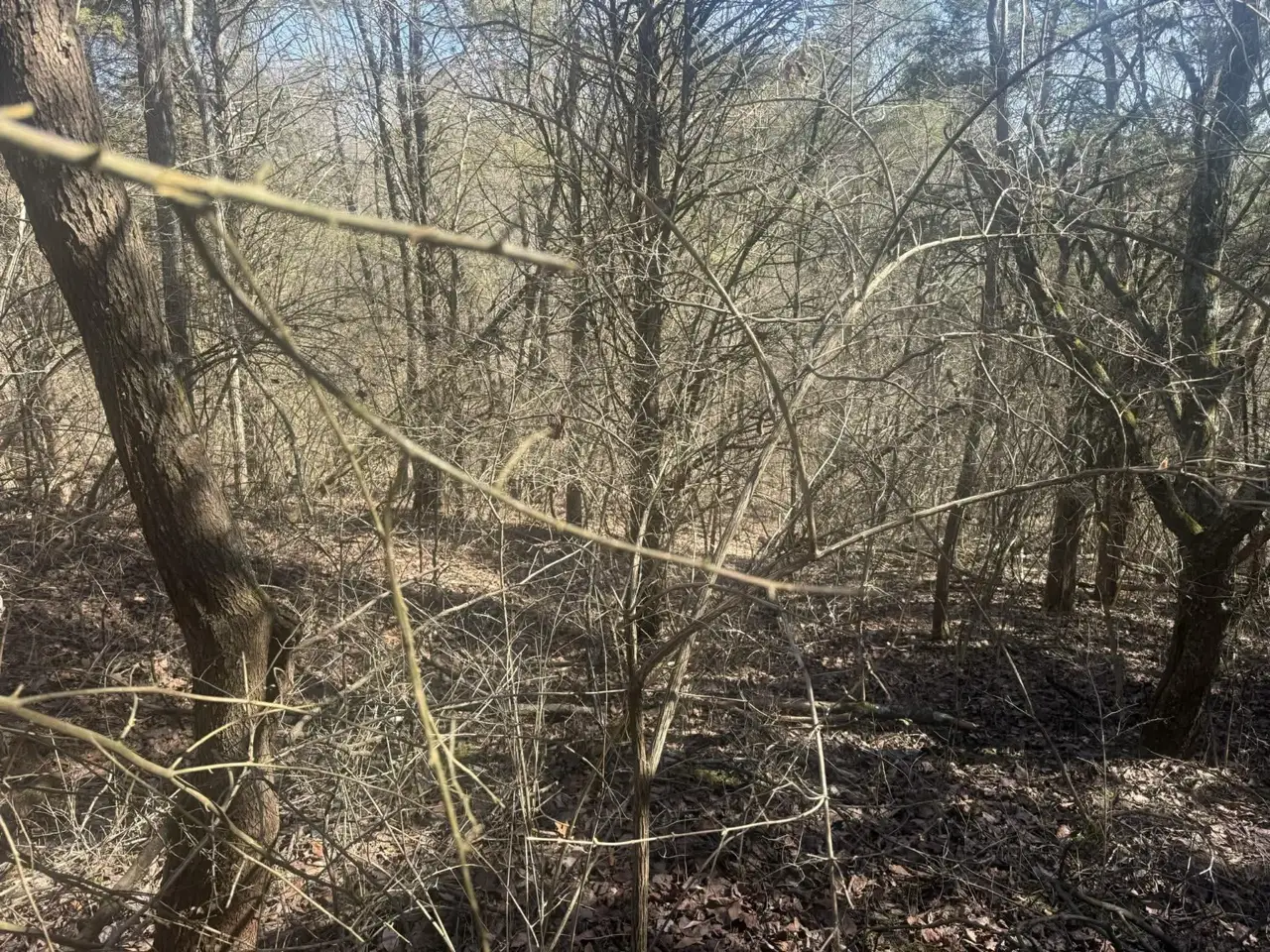
A forestry mulcher can clear trees up to 8 inches in diameter at full speed and handle trees up to 10–12 inches with multiple passes. It processes brush, saplings, invasive species like honeysuckle and multiflora rose, stumps to ground level, and fallen trees. It cannot efficiently handle trees over 12 inches, rock, concrete, metal, fencing, or standing water.
The Honest Answer
A forestry mulcher is not a magic wand. It is an incredibly effective tool for a specific range of vegetation, and it is the wrong tool for things outside that range. We turn down jobs when mulching is not the right fit. That is not lost revenue — it is honest work. Here is exactly what our equipment handles and where the limits are.
Trees: The Size Question
This is what everyone wants to know first, and the answer has nuance that most contractors gloss over.
Under 4 Inches — No Problem
Saplings, young growth, volunteer trees. The mulcher barely slows down. A 3-inch cedar is gone in maybe two seconds. A dense stand of 2–4 inch saplings that would take a chainsaw crew hours to cut, stack, and haul takes us an hour to mulch. This is where the machine earns its keep.
These smaller trees are the bread and butter of land reclamation work. Old fields in Grant County that have grown up in cedar and locust over 5–10 years — that is a perfect mulching job.
4 to 8 Inches — Ideal Range
This is the sweet spot. Trees in this diameter range are large enough that manual clearing is a real chore, but small enough that the mulcher processes them efficiently. We approach the tree, lower the mulching head, and grind through the trunk in 10–20 seconds depending on species. Hardwoods take longer than softwoods. An 8-inch red cedar goes faster than an 8-inch white oak.
We clear a lot of hackberry, box elder, black locust, eastern red cedar, and ash in this size range across Northern Kentucky. These are the trees that colonize abandoned fields and untended property edges.
8 to 12 Inches — Doable, With Caveats
The machine can handle trees in this range, but the process changes. Instead of grinding straight through the trunk in one motion, we work around the circumference, taking bites and letting the teeth do the work. A 10-inch tree might take 30–60 seconds. A 12-inch tree might take a couple of minutes.
The cost per tree goes up in this range because of time and tooth wear. If your property has scattered 10-inch trees mixed in with smaller stuff, no problem — we handle them as we go. But a solid stand of 12-inch hardwoods is not a mulching job. It is a logging or chainsaw job first, then a mulching job for the remaining brush.
We are always straight about this during the site walk. If half the trees on your property are over 10 inches, we will tell you that pre-cutting the big ones and then mulching the rest is more cost-effective than trying to force the mulcher through everything.
Over 12 Inches — Wrong Tool
Can the mulcher physically grind a 14-inch tree? Technically, yes. Should it? No. It takes several minutes, burns through teeth at an alarming rate, puts excessive stress on the hydraulics, and costs more per tree than having a chainsaw operator drop it. We do not attempt trees over 12 inches with the mulcher.
If your property has large timber, the smart approach is selective logging or chainsaw felling first, then mulching. A logging operation might even pay you for valuable hardwoods — walnut, white oak — while we clean up everything they leave behind.
Brush and Scrub
This is where forestry mulching is unmatched. Dense brush that would take a crew days to cut and drag out by hand disappears in hours.
Honeysuckle thickets — Bush honeysuckle is the single most common thing we mulch in Northern Kentucky. It forms impenetrable walls 8–10 feet tall. The mulcher flattens it like it is not there. One pass and it is gone. The catch is that honeysuckle resprouts aggressively from the roots. If you do not follow up with herbicide 6–8 weeks later, it will come back within two years. We always tell people this upfront.
Multiflora rose — Another invasive that is everywhere in our area. The thorns are brutal, which is one reason people hire us rather than trying to clear it by hand. The mulcher does not care about thorns. Same resprouting concern as honeysuckle.
Autumn olive — Common on old farm fields and road edges across Grant and Pendleton counties. Mulches easily, and unlike honeysuckle, it is slower to resprout. Still worth a herbicide follow-up.
Privet — Shows up in shady areas, stream banks, and wooded edges. Grinds quickly. Resprouts moderately.
Bradford pear — These invasive ornamentals are spreading across Kentucky. They are brittle wood that the mulcher handles easily, but they produce root sprouts like crazy after cutting. Herbicide follow-up is important.
Blackberry and raspberry canes — The mulcher obliterates them. But like most invasive species, they grow back from the roots. A second mulching pass the following year, combined with seeding competitive grasses, is the long-term solution.
Stumps
The mulcher grinds stumps down to ground level or 2–4 inches below. This is enough for most purposes — walking, mowing, planting grass, running equipment over the area. The stump is flush with the surrounding ground, and the mulch covers it.
Where this falls short is construction. If you are building a house, pouring a slab, or installing a driveway, stumps need to be ground or excavated to 12–18 inches below grade. That requires a dedicated stump grinder, which is a different piece of equipment. We offer stump grinding as an add-on service, but it is separate from the mulching quote.
One thing worth mentioning: the root ball stays in the ground after mulching. Roots decay over time, and as they decompose, the ground above can settle slightly. For pasture and trails, this is not an issue. For a building pad, it matters. We discuss this with every client who is clearing for construction.
Fallen Trees and Deadwood
Downed trees from storms, dead standing trees, piles of old brush — the mulcher processes all of it. A tornado-damaged property with trees scattered everywhere is a good mulching job because the machine can work through the debris systematically without needing to cut and stack by hand.
The one complication with downed trees is that they sometimes trap fencing, wire, or other metal debris underneath. We watch carefully when processing fallen trees because a hidden piece of wire can break teeth instantly.
Tall Grass and Weeds
The mulcher can cut tall grass and weeds, but it is overkill. If your property is just overgrown grass and weeds without woody vegetation, a bush hog or rotary cutter is the right tool at a fraction of the cost. We will tell you that and refer you to someone with a tractor and bush hog.
Where the mulcher makes sense for grass is when the grass is mixed in with woody vegetation. A field with scattered cedars, honeysuckle clumps, and three-foot-tall fescue — that is a mulching job because a bush hog cannot handle the woody material.
Terrain Limitations
Slopes
Our tracked mulcher handles slopes up to about 25 degrees comfortably and can work on slopes up to 30 degrees with extra caution. Beyond 30 degrees, the machine becomes unstable and the risk of sliding is too high.
Northern Kentucky has steep terrain along the Ohio and Licking River corridors and throughout the hilly areas of Campbell, Pendleton, and Bracken counties. Some of these slopes are simply too steep for the equipment. On a recent site visit in Campbell County along Four Mile Creek, about a third of the property was too steep to mulch safely. We cleared the accessible areas and left the steep sections alone.
For slopes that exceed our equipment limits, the options are chainsaw crew work (done on foot) or leaving the vegetation in place. In many cases, steep slopes should keep their vegetation for erosion control purposes anyway.
Wet Ground and Standing Water
Our mulcher weighs about 20,000 pounds on tracks. Tracks spread the weight and give us a ground pressure of only about 4–5 PSI, which is less than a person standing on one foot. But even that is too much on saturated clay.
Northern Kentucky's clay soils are notorious. After a week of rain, low areas become impassable. We postpone jobs when ground conditions are poor because the alternative is leaving 6-inch-deep ruts across your property. That is not acceptable to us and should not be acceptable to you.
Standing water — ponds, seasonal wetlands, flooded lowlands — is a no-go. The machine is not amphibious. We work around wet areas and clear everything accessible.
Rocky Ground
Surface rock is a problem for the mulching head. Carbide teeth are tough, but hitting a limestone ledge or a large rock can crack a tooth, chip the drum housing, or throw the rock at dangerous speed. Parts of Campbell County and the areas along the Kentucky River are rocky enough that we have to pick our way carefully.
We assess rock conditions during the site walk. If a property has significant surface rock, we factor that into the price (slower work, more tooth replacements) and may recommend clearing by hand in the worst sections.
The Stuff That Will Ruin Your Day (and Our Equipment)
These are the things that cause real damage and that we absolutely need to know about before we start.
- Old fencing — Barbed wire, woven wire, T-posts. Wire that has been on the ground for years gets buried in leaf litter and grown into trees. One hit snags the wire into the drum, wraps it around the shaft, and shuts the machine down for an hour or more while we cut it free. We ask every landowner about fencing.
- Cable and chain — Old logging cable, tow chains, dog runs. Same problem as fencing but worse because the material is heavier.
- Metal debris — Engine blocks, old farm implements, pipe, rebar. Anything metal that the teeth hit at 2,000 RPM is a tooth-breaker at minimum.
- Concrete and masonry — Old foundations, block, poured footings. The drum is not designed for mineral material. It can nick a piece of concrete and survive, but grinding through an old foundation wall will destroy the teeth.
We have found every one of these things on properties that the landowner swore were clean. Old farms accumulate junk for generations, and the brush grows over it. The site walk catches most of it, but not always everything.
What We Recommend Instead When Mulching Is Wrong
- Trees over 12 inches — Chainsaw crew for felling, then mulcher for cleanup
- Full site prep for construction — Excavator and dozer combination for grubbing and grading
- Open field maintenance — Bush hog or rotary cutter at $300–$800 per acre
- Individual tree removal — Arborist with a crane for trees near structures
- Wetland areas — Leave them alone unless you have the proper federal permits
We are not in the business of forcing our equipment onto jobs where it does not fit. If mulching is the right answer, we will tell you. If it is not, we will tell you that too and point you to someone who can help.
Real Examples of What We Have Cleared
3 acres of honeysuckle and cedar in Florence — Property had been untouched for 12 years. Dense bush honeysuckle up to 10 feet tall with scattered cedar trees up to 6 inches. Mulched in one day. Looked like a park when we finished. The owner followed up with herbicide treatment and seeded fescue. A year later it was a usable yard.
8 acres of mixed hardwoods in Independence — Former wooded lot being cleared for a subdivision. Trees ranged from 4–14 inches. We pre-cut anything over 10 inches with a chainsaw crew, then mulched the rest. Stumps ground flush. The developer graded and built on the cleared pad with no issues.
5-acre overgrown fence line in Grant County — Multiflora rose and locust trees had consumed an old barbed wire fence. We pulled the wire first (by hand, carefully), then mulched the vegetation. Half-day job.
Related Services
We Serve These Areas
What Can a Forestry Mulcher Actually Clear? FAQ
Our forestry mulcher efficiently handles trees up to 8 inches in diameter and can process trees up to 10–12 inches with multiple passes. Trees over 12 inches should be cut with a chainsaw first. Attempting to mulch very large trees is inefficient and can damage the equipment.
A forestry mulcher grinds stumps to ground level or 2–4 inches below grade. This is sufficient for pasture, trails, and general use. For construction that requires stumps removed 12–18 inches below grade, a dedicated stump grinder is needed as a separate service.
Mulching kills the top growth of honeysuckle instantly, but the root system survives. Without herbicide follow-up treatment 6–8 weeks after mulching, honeysuckle will resprout from the roots within one to two years. We recommend a combined mulching and herbicide approach for permanent control.
Tracked forestry mulchers can safely work on slopes up to about 25–30 degrees. Slopes steeper than 30 degrees are generally too steep for the equipment due to stability and safety concerns. For very steep terrain, manual chainsaw clearing may be the only option.
The mulching head works at ground level, so it typically does not disturb underground utilities buried at standard depths. However, shallow utilities, abandoned lines, and unmarked pipes can be at risk. We require 811 utility locates before every job to identify underground hazards.
Yes. We flag keeper trees with orange tape before starting and leave a buffer around them. The operator has precise control over the mulching head and can work within a few feet of trees you want to preserve without damaging them.
Ready to Get Started?
Free on-site estimates for all properties in our service area.
Ready to Clear Your Land?
Get a free, no-obligation estimate for your project. We respond fast and show up on time.
Try our cost calculator · Serving Northern Kentucky, Greater Cincinnati, and Southeast Indiana · 24/7 — Emergency Service Available