
Storm Damage Land Cleanup: What Property Owners Should Do
After the storm passes, the real work starts. Here's what to do first, what to document for insurance, and when to call for help.
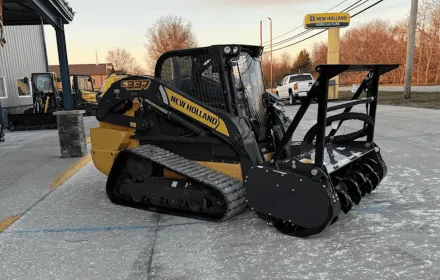
After storm damage, property owners should first check for downed power lines and gas leaks before entering the affected area. Document all damage with photos and video for insurance claims before any cleanup begins. Forestry mulching can process downed trees and debris on-site in hours, eliminating the need for chainsaw cutting, hauling, and disposal.
The Morning After
The storm rolled through last night. Maybe you heard it — that deep, freight-train rumble that makes you grab the kids and head for the basement. Maybe you slept through it and walked outside to a different property than the one you went to bed with.
Either way, you're standing in your yard looking at downed trees, snapped limbs, and debris scattered across your land. The power's probably out. Your phone is buzzing with weather alerts. Neighbors are wandering around in their bathrobes looking stunned.
Take a breath. We're going to walk through this step by step.
After the 2023 derecho, we spent six straight weeks doing nothing but storm cleanup in Boone County. We've seen what these Ohio Valley storms can do, and we've also seen people make expensive mistakes in the first 24 hours because they panicked. This guide is what we wish every property owner had before the next big one hits.
Ohio Valley Storm Patterns: What Just Hit You
If you live in Northern Kentucky, Greater Cincinnati, or Southeast Indiana, you're in one of the more active severe weather corridors east of the Mississippi. The Ohio River valley funnels storm systems and creates conditions for:
- Straight-line winds — these aren't tornadoes, but they can push 80+ mph and knock down swaths of trees in a single direction. The damage pattern looks like someone laid down a giant comb.
- Microbursts — concentrated downdrafts that slam into the ground and push outward. Small area, massive damage. A microburst can snap healthy 60-foot oaks like matchsticks in a circle roughly a quarter mile wide.
- Ice storms — more of a January/February problem. The weight of ice accumulation brings down limbs and entire trees that looked perfectly healthy the day before.
- Flooding and saturated soil — after heavy rain, the root systems lose their grip. Trees that survived the wind sometimes topple days later when the soil is still waterlogged.
The point is this: storm damage here isn't rare. It's seasonal. And the variety of damage types means there's no one-size-fits-all cleanup approach.
First 30 Minutes: Safety Before Everything
Before you touch a single branch, do these things. In this order.
Stay Away From Downed Lines
This is the one that can kill you. A downed power line may not look live — no sparking, no buzzing — and still carry enough voltage to be fatal. The ground around a downed line can be energized for 30 feet or more. If you see a wire on the ground or draped across a tree, stay away and call your utility company. In Northern Kentucky that's Duke Energy at 800-543-5599.
Do not try to move the wire. Do not drive over it. Do not assume the power is out just because your house is dark.
Check for Gas Leaks
If you smell gas or hear hissing near a meter, leave the area and call your gas company. Don't flip light switches or start your generator near a suspected leak.
Look Up Before You Walk Under Anything
After high winds, trees often have broken limbs wedged in the canopy — we call them widow-makers in the tree industry. They're heavy, they're unstable, and they fall without warning. Walk your property with your head up. If you see broken limbs still hanging, don't walk or work underneath them.
Account for Everyone
Check on neighbors, especially elderly ones who may not be able to get outside or who might be trapped by debris on doors or walkways.
Document Everything Before You Clean Up Anything
This is where people lose money. In the rush to clean up, they start cutting and dragging before they've documented the damage. Then the insurance adjuster shows up to an already-cleared property and has nothing to assess.
What to Photograph
- Wide shots of the overall damage from multiple angles
- Close-ups of specific damage — cracked trunks, root balls pulled from the ground, impact points on structures
- Structural damage — if a tree hit your house, fence, shed, vehicle, or outbuilding, get detailed photos of the contact point and the resulting damage
- The trees themselves — photos of the downed trees with something for scale (a person, a vehicle, a tape measure)
Video Walkthrough
Take a slow video walking the entire property. Narrate it — describe what you're seeing, point out damage. This is surprisingly useful for insurance adjusters who visit days later after some cleanup has already happened.
Write It Down
Date and time of the storm. Description of what you heard and saw. List of all damaged items. Keep a running log as you discover more damage over the following days — sometimes you don't notice a cracked foundation or damaged siding until a week later.
Do not move, cut, or remove anything until you've documented it. Fifteen minutes of photos and video can be worth thousands of dollars on your insurance claim.
Insurance Claim Tips from What We've Seen
We're not insurance adjusters, but we've been on hundreds of storm damage properties and we've seen how claims play out. Here's what we've learned:
File immediately. Don't wait to assess the full extent. Call your insurance company the same day or the next morning. After a major storm, every property owner in the area is calling at the same time, and adjusters are scheduled on a first-come basis.
Get a claim number. Write it down. You'll need it for every conversation going forward.
Ask about debris removal coverage. Most homeowner's policies cover the cost of removing trees that fell on structures (house, garage, fence). Trees that fell on open ground are often covered only up to a limited amount — sometimes $500 per tree, sometimes $1,000 total. Know what your policy says.
Don't sign anything with the first contractor who knocks. After every major storm, trucks with out-of-state plates show up offering cash deals for tree removal. Some are legitimate traveling crews. Some are not. Get at least two estimates from companies with verifiable local presence.
Keep receipts for everything. Temporary repairs, tarps, generator fuel, hotel stays if your home is uninhabitable — all potentially reimbursable.
Emergency vs. Non-Urgent: Prioritizing the Cleanup
Not everything needs to happen today. Here's how we categorize storm damage when we're triaging calls:
Handle Immediately (Day 1)
- Trees on structures or vehicles — they're causing ongoing damage from rain, wind, and weight
- Trees blocking your driveway or road access — you need to get in and out
- Trees on or near power lines — call the utility company, not a tree service
- Anything creating a safety hazard for people walking on the property
Handle This Week
- Trees blocking access to outbuildings, barns, or equipment
- Downed trees in pastures where livestock are kept
- Large root balls that may shift or fall further
- Trees leaning on other trees (these are dangerous but stable short-term)
Can Wait 2–4 Weeks
- Downed trees in wooded areas or unused portions of the property
- Scattered limbs and brush across open land
- Stump removal from trees already cut
- Cosmetic cleanup along fence lines and property edges
Not every storm warrants a $2,000 cleanup. Sometimes it's a $200 problem — a couple of limbs dragged to the curb and a call to your normal lawn guy. Save the heavy equipment for when you actually need it.
How Forestry Mulching Handles Storm Damage Differently
Here's the traditional storm cleanup process: a chainsaw crew shows up, bucks the trees into manageable sections, loads the logs into a truck or feeds them into a chipper, and hauls everything away. It works. It's also slow, expensive, and leaves ruts from all the truck traffic.
Forestry mulching is a different approach entirely. The mulching machine drives to the downed tree, processes it in place — trunk, limbs, leaves, all of it — and leaves a mulch layer on the ground. One machine, one operator.
Why It's Faster
A chainsaw crew of three people might spend a full day processing a single large downed oak — cutting, splitting, dragging, loading, hauling. Our mulching equipment handles the same tree in under an hour. There's no second trip to the dump. No chipper to feed. No log truck to load.
On a property with multiple downed trees spread across several acres, that time difference multiplies. We've cleared storm damage in a day and a half that would have taken a chainsaw crew a full week.
When Mulching Isn't the Right Call
We'll be straight with you — mulching isn't always the answer for storm damage.
- If a single tree fell on your roof and needs to be carefully sectioned and lifted off, you need a crane and a tree crew, not a mulcher.
- If the downed trees are high-value hardwood (walnut, cherry, white oak) in log-grade condition, you may want to salvage them for lumber rather than mulch them.
- If the debris is in a tight space between structures, our machine may not fit. Chainsaw work is sometimes the only option in confined areas.
We'll tell you if mulching isn't the right fit. We'd rather point you in the right direction than show up with equipment that doesn't match the job.
Our Storm Response: What to Expect
When a major storm hits our service area, we shift to storm response mode. Here's what that looks like:
24-hour response — we answer storm calls around the clock after a significant weather event. Leave a message if you can't reach us; we're probably on a machine.
Triage — we prioritize emergency situations (blocked roads, trees on structures) over cosmetic cleanup. If your situation is urgent, we'll say so. If it can wait a few days while we handle emergencies, we'll tell you that too.
Same estimate process — we still do a walk-through and give you a firm number before starting. Storm pricing doesn't mean surprise pricing.
Insurance coordination — we'll provide a detailed invoice and before/after photos that your insurance company can use for claim processing. We've done this enough times that we know what adjusters want to see.
After the Cleanup: Preventing Future Damage
Once the immediate damage is handled, it's worth thinking about what made the damage worse and what you can do before the next storm.
Dead trees and dead limbs are the first to come down. If you have standing dead timber on your property, consider removing it before it falls on its own schedule instead of yours.
Overgrown fence lines trap wind. Dense brush along a fence acts like a sail — when the wind hits, the fence takes the load. Keeping fence lines clear reduces storm damage to fencing.
Crowded tree stands create competition. Trees growing too close together reach tall and thin for sunlight, which makes them more likely to snap in wind. Selective clearing — taking out the weakest trees and giving the strong ones room — makes the whole stand more wind-resistant.
Drainage matters. Saturated soil means unstable root systems. If you have areas that pool water around tree bases, improving drainage helps those trees stay anchored.
You can't prevent storms. But you can make your property more resilient to the next one. And in the Ohio Valley, there's always a next one.
Related Services
We Serve These Areas
Storm Damage Land Cleanup: What Property Owners Should Do FAQ
We offer 24-hour response after significant storms in Northern Kentucky, Greater Cincinnati, and Southeast Indiana. Emergency situations like trees on structures or blocked roads are prioritized first.
No. Document all damage thoroughly with photos, video, and written notes before any cleanup begins. Moving or removing debris before the adjuster assesses the damage can reduce your claim payout.
Most policies cover removal of trees that fell on structures. Trees that fell on open ground typically have limited coverage — often $500–$1,000 total. Check your specific policy and file your claim immediately after the storm.
Forestry mulching processes downed trees in place — grinding the trunk, limbs, and brush into mulch on-site. No hauling, no chipping, no dump runs. One machine replaces an entire chainsaw crew and finishes significantly faster.
Trees on structures usually require careful chainsaw sectioning and sometimes a crane to avoid further damage to the building. We will assess the situation and let you know if mulching is appropriate or if you need a specialized tree crew.
Ready to Get Started?
Free on-site estimates for all properties in our service area.
Ready to Clear Your Land?
Get a free, no-obligation estimate for your project. We respond fast and show up on time.
Try our cost calculator · Serving Northern Kentucky, Greater Cincinnati, and Southeast Indiana · 24/7 — Emergency Service Available