
Clearing Steep Hillsides in Cincinnati and Northern Kentucky
The Ohio River valley carved some serious hills into this region. Clearing them takes different equipment and a different approach than flat ground.
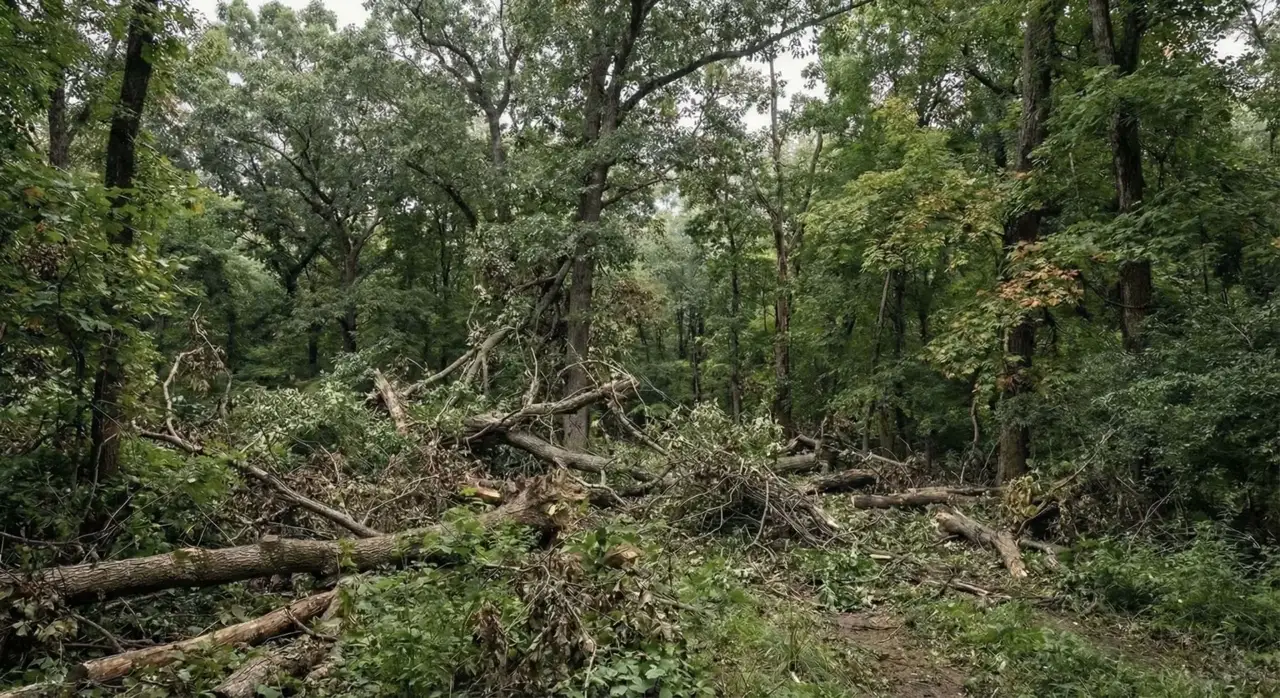
Clearing steep hillsides in the Cincinnati and Northern Kentucky area requires tracked forestry mulching equipment rather than bulldozers, which cannot safely operate on slopes over 15 to 20 degrees. Forestry mulching preserves root systems and leaves a mulch erosion barrier on the slope. Cost runs $2,000 to $4,500 per acre for hillside work, about 30% more than flat-ground clearing due to slower machine speed and safety precautions.
Hill Country Is What We Have
If you have driven through Cincinnati, Covington, Newport, Fort Thomas, or anywhere along the Ohio River, you know this is not flat ground. The river and its tributaries carved steep valleys through limestone and shale over millions of years. What is left is a landscape of ridges, hollows, and hillsides that range from gently rolling to nearly vertical.
That terrain creates problems when you need to clear land. The methods that work on a flat 5-acre field in Grant County do not work on a 40-degree hillside in Mt. Adams. Equipment that operates safely on level ground becomes dangerous on a slope. And the consequences of getting it wrong are worse on a hill because gravity makes everything slide downhill, including soil, equipment, and your investment.
We clear steep ground regularly across the Cincinnati metro area and Northern Kentucky. It is some of the most challenging work we do, and it is also where proper technique makes the biggest difference.
Why Bulldozers Cannot Work Steep Slopes
The traditional approach to land clearing involves a bulldozer pushing over trees and scraping vegetation into piles. On flat ground, this works. On slopes, it fails for several connected reasons.
Traction and Stability
A bulldozer is a heavy machine with a high center of gravity. On slopes over about 15 to 20 degrees, the machine starts losing traction. The tracks slip on wet clay, and Northern Kentucky hillsides are almost always clay. A sliding bulldozer on a hillside is a safety emergency that can damage equipment, the operator, and everything downhill.
Even if the machine can hold traction, operating on a side slope creates a tipping risk. A loaded dozer blade on a cross-slope shifts the center of gravity to the downhill side. Operators who push this limit get hurt.
Soil Disturbance
A bulldozer blade scrapes the topsoil layer off the ground. On flat land, you lose your topsoil but the ground stays put. On a hillside, exposed subsoil is clay. Clay gets wet. Wet clay on a slope moves. What starts as a clearing job turns into a landslide mitigation project after the next heavy rain.
The hills around Cincinnati and Covington are prone to landslides even without human interference. The geologic layers of limestone over shale create natural slip planes. Remove the vegetation and topsoil holding the surface together, and you accelerate a process that was already trying to happen.
No Place for Debris
Bulldozers push cleared material into piles. On a hillside, where does the pile go? Downhill. Into the neighbor's yard, into the creek, into the road. Burning those piles on a slope creates its own problems with fire management and ash runoff. The logistics of debris removal on steep ground add cost and time that make traditional clearing impractical.
How Forestry Mulching Works on Hillsides
A tracked forestry mulcher handles slopes differently because it does not move soil, does not push debris, and does not need to pile anything. The machine grinds vegetation in place and leaves the mulch where it falls.
Equipment for Slope Work
We use a tracked carrier for all hillside work. The wide tracks distribute the machine weight and provide traction that wheeled equipment cannot match on clay slopes. Our mulcher can operate on slopes up to about 25 to 30 degrees, depending on conditions. Above 30 degrees, we evaluate on a case-by-case basis. Some 35-degree slopes are workable if the ground is dry and firm. Others are not.
The machine works across the slope rather than straight up and down. Moving laterally across a hillside gives the tracks maximum contact with the ground and minimizes the risk of sliding. We start at the top of the slope and work down in passes, which keeps the cleared area above us where we can see it and keeps unprocessed vegetation below as a buffer.
Root Systems Stay in Place
This is the single biggest advantage of mulching on slopes. The root systems of every tree and shrub we grind remain in the ground. Those roots are holding the hillside together. On a 25-degree clay slope, the difference between a root-reinforced surface and a stripped surface is the difference between a stable hillside and a mudslide.
We had a job in Fort Thomas two years ago, a 1.5-acre hillside behind a row of houses that the homeowner's association wanted cleared. The slope was about 25 degrees, all clay, and covered in honeysuckle and small trees. We mulched the entire area over two days. The mulch layer on the surface acted as an erosion blanket. The roots below held the soil. That hillside has been through two full rainy seasons since then with no movement.
If that same hillside had been bulldozed, I would not want to live in the houses below it.
Erosion Prevention After Clearing
Even with mulching, a cleared hillside needs attention. The mulch layer helps, the roots help, but you have still removed the canopy that was intercepting rain and the understory that was slowing water flow.
Immediate Measures
- Leave the mulch layer in place. Do not rake it, do not remove it, do not mow over it. That mulch is your erosion defense for the first 6 to 12 months.
- Seed as soon as possible. If you are clearing in spring or early fall, get grass seed down within two weeks of mulching. A broadcast seeder over the mulch layer works. The mulch holds moisture and gives the seed a good germination bed.
- Install erosion control where water concentrates. If there are natural drainage channels on the hillside, place silt fence or wattles (straw tubes) at the base of those channels. Most mulched hillsides do not need this, but where water flows in a defined path, it is cheap insurance.
Longer-Term Stabilization
- Establish deep-rooted vegetation. Native warm-season grasses like switchgrass and big bluestem send roots 4 to 6 feet deep. That root depth provides long-term slope stability far beyond what fescue offers.
- Consider retaining walls for very steep sections. If part of your hillside is over 35 degrees and you need to build near it, a retaining wall or terracing system may be necessary. We do not build retaining walls ourselves, but we work with contractors who do and can coordinate the clearing with their wall schedule.
- Drainage management. Hillside drainage matters more than flat-ground drainage. Water moving downhill across a cleared slope picks up speed. A swale or French drain at the top of the slope diverts water before it reaches the cleared area.
Cincinnati and NKY Neighborhoods with Steep Terrain
If you live in any of these areas, you already know about the hills.
- Mt. Adams (Cincinnati): Some of the steepest residential lots in the metro area. Many backyards are essentially hillsides.
- Covington hillside neighborhoods: The areas above the riverfront, particularly around Devou Park and the Battery area, have significant slopes.
- Fort Thomas: Perched on the ridge above the river. Properties on the east and west sides of the ridge have steep back lots.
- Newport: Similar to Covington, with steep terrain climbing from the river up to higher elevations.
- Cold Spring and Highland Heights: Rolling terrain with some significant slopes, especially along creeks.
- Indian Hill and Terrace Park (OH): Bluff properties along the Little Miami River with steep wooded slopes.
In all of these areas, the combination of clay soil, steep terrain, and heavy vegetation creates a specific set of clearing challenges. We have worked in most of them and understand the local conditions.
Retaining Walls and Drainage
Clearing a hillside often reveals drainage problems that the vegetation was hiding. Water that was flowing through brush and over leaf litter now moves faster over a mulched surface. That is usually temporary until grass establishes, but in the interim, you may need to manage water flow.
If you are clearing a hillside as part of a larger project, like building a patio, installing a pool, or adding a retaining wall, plan the drainage before you clear. We coordinate with general contractors and landscape architects on these projects regularly. The clearing comes first, but the drainage and wall design should already be on paper before we start.
Common drainage solutions on cleared hillsides include:
- Surface swales: Shallow channels cut across the slope to redirect water sideways toward a safe outlet.
- French drains: Gravel-filled trenches with perforated pipe that collect subsurface water and route it downhill in a controlled path.
- Catch basins: Collection points where water from multiple directions converges, piped to a safe discharge point.
- Riprap channels: Rock-lined channels for handling concentrated water flow on steep grades.
Cost for Hillside Clearing
Hillside work costs more than flat-ground clearing. The machine moves slower, the operator has to be more careful, and mobilization to steep sites takes longer.
| Slope Grade | Cost Per Acre | Notes |
|---|---|---|
| 10-15 degrees (moderate) | $1,800-$2,800 | Slightly slower than flat ground |
| 15-25 degrees (steep) | $2,500-$3,500 | Requires careful cross-slope passes |
| 25-30 degrees (very steep) | $3,000-$4,500 | Evaluated case by case, may require special rigging |
| Over 30 degrees | Case by case | Not always feasible with equipment |
These numbers include standard brush and small tree vegetation. Add heavy tree cover or difficult access and the price goes up. Hillsides that require the machine to be lowered on a cable from above are specialty work with specialty pricing.
On steep hillside jobs, the site visit is not optional. We need to walk the slope, check the soil conditions, identify drainage patterns, and determine whether the machine can safely operate. Photos and satellite images are not enough for hillside estimates.
What We Will Not Do
We turn down hillside jobs when the slope is too steep for safe equipment operation. If a hillside is over 30 to 35 degrees and the soil is wet clay, no amount of money makes it safe to put a 20,000-pound machine on it. We will tell you that during the site visit rather than finding out the hard way.
We also will not clear a hillside that has obvious signs of previous slide activity, like curved tree trunks (trees that have been tilted by slow soil movement and grown back upward), cracked ground at the top of the slope, or bulging soil at the base. Those sites need a geotechnical assessment before any clearing work.
EarthWorx has been clearing hillsides across the Cincinnati and Northern Kentucky area since we started. Request a free estimate — we know which slopes work and which ones do not, and we are honest about the difference.
Related Services
We Serve These Areas
Clearing Steep Hillsides in Cincinnati and Northern Kentucky FAQ
Bulldozers are generally unsafe and impractical on slopes over 15 to 20 degrees. They lose traction on clay soil, risk tipping on cross-slopes, and strip topsoil that leads to erosion and landslides. Forestry mulching is the preferred method for hillside clearing because it preserves root systems and topsoil.
Tracked forestry mulchers can typically operate on slopes up to 25 to 30 degrees safely, depending on soil conditions and moisture. Slopes above 30 degrees are evaluated case by case. Wet clay slopes reduce the safe operating angle significantly.
Leave the mulch layer in place as an erosion barrier, seed grass within two weeks of clearing, and install erosion control measures at water concentration points. The intact root systems from mulching provide slope stability that bulldozing would destroy.
Hillside clearing runs $1,800 to $4,500 per acre depending on slope grade and vegetation density. This is 20 to 50% more than flat-ground clearing due to slower machine speed and additional safety precautions. Very steep slopes over 30 degrees are priced case by case.
Forestry mulching minimizes landslide risk because it preserves root systems and leaves a protective mulch layer. Bulldozing, which strips vegetation and topsoil, significantly increases slide risk on clay slopes. However, any hillside with existing slide indicators should be assessed by a geotechnical engineer before clearing.
Ready to Get Started?
Free on-site estimates for all properties in our service area.
Ready to Clear Your Land?
Get a free, no-obligation estimate for your project. We respond fast and show up on time.
Try our cost calculator · Serving Northern Kentucky, Greater Cincinnati, and Southeast Indiana · 24/7 — Emergency Service Available