
Land Clearing Cost per Acre in Kentucky: What to Budget in 2025
What land clearing actually costs across Kentucky in 2025, broken down by region, vegetation type, lot size, and clearing method — with honest numbers from real jobs.
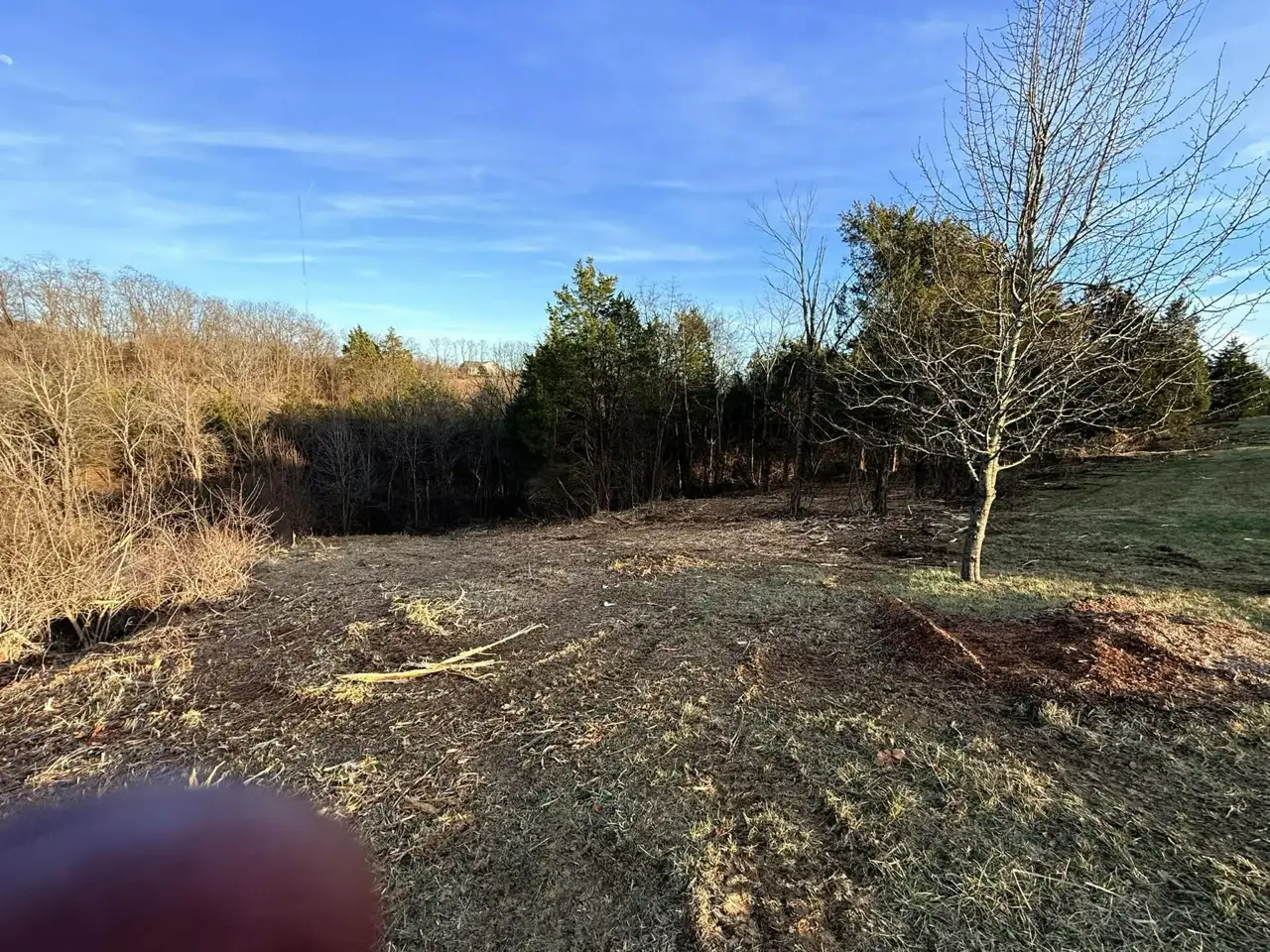
Land clearing in Kentucky costs $1,500 to $6,000 or more per acre in 2025, depending on the clearing method, vegetation density, terrain, and region. Northern Kentucky averages $1,500–$4,500 per acre for forestry mulching. Central Kentucky runs slightly higher for heavy timber. Eastern Kentucky is the most expensive due to steep terrain and dense hardwood forests.
What Land Clearing Costs in Kentucky Right Now
I will save you the suspense. Land clearing in Kentucky in 2025 runs somewhere between $1,500 and $6,000+ per acre. That is a wide range, and there is no getting around it. Clearing a field of honeysuckle and clearing a hillside of mature oak are not the same job, and they do not cost the same.
But I can narrow it down a lot further than that. The cost depends on four things: what is growing, how steep the ground is, which part of the state you are in, and what clearing method you use. Let me walk through each one.
Cost by Vegetation Density
This matters more than anything else. Two properties a mile apart can have completely different clearing costs if the vegetation is different.
| Vegetation Density | Description | Per-Acre Cost |
|---|---|---|
| Light | Grass, weeds, saplings under 4", scattered brush | $1,500–$2,500 |
| Medium | Mixed brush and trees 4–8", invasive thickets | $2,500–$4,000 |
| Heavy | Mature hardwoods 8–12"+, dense canopy and understory | $4,000–$6,000+ |
| Overgrown field | Former ag land with 5–15 years of regrowth | $1,800–$3,500 |
Light Vegetation: $1,500–$2,500 per Acre
This is a field that stopped getting mowed or hayed four or five years ago. Grass is waist-high, there are saplings popping up, maybe some honeysuckle starting along the fence lines. A forestry mulcher chews through this fast. We can cover 3 to 5 acres of light vegetation in a day on flat ground.
Old hay fields around Williamstown and Dry Ridge that nobody has touched since the cows left — that is textbook light vegetation work.
Medium Vegetation: $2,500–$4,000 per Acre
The most common thing we see. A property that has been sitting for 10 to 15 years with a mix of cedars, hackberry, locust, box elder, and invasive species. Trees are in the 4 to 8 inch range. Thick enough that walking through it is a fight.
The old tobacco farms along Hwy 22 in Pendleton County are almost all in this condition now. The fields stopped being worked in the early 2000s and nature has filled in every gap. These jobs take more passes with the mulcher and burn more hours per acre.
Heavy Vegetation: $4,000–$6,000+ per Acre
Land that has been wooded for decades. Mature ash, oak, maple, walnut — big trees with a jungle of undergrowth beneath them. The hollows and ridgelines in eastern Pendleton County and along the Licking River are like this.
Heavy clearing usually means a combined approach. A chainsaw crew drops the big stems first, then the mulcher processes everything else. If you also need stumps removed for construction, add an excavator with a stump bucket. Every additional piece of equipment adds to the bill.
Cost by Region — Kentucky Is Not One Market
People search for "land clearing cost Kentucky" like the whole state is one price. It is not. Terrain, vegetation type, and contractor availability vary a lot across the state.
Northern Kentucky: $1,500–$4,500 per Acre
Boone, Kenton, Campbell, Grant, Pendleton, and Gallatin counties. This is our home territory. Mobilization from our base in Demossville is short, which keeps costs down.
The terrain here is rolling to steep. Clay soils that get slick when wet. A mix of old farmland that is growing up in brush, wooded hollows along creeks, and suburban development pushing into rural areas. Invasive honeysuckle is everywhere, especially along the river corridors and creek bottoms.
Demand for land clearing is strong in NKY because of residential development. People are buying 3 to 10 acre parcels for home sites and need them cleared before construction. The Florence-Burlington-Union corridor is especially active.
Central Kentucky / Bluegrass Region: $2,000–$5,500 per Acre
Scott, Harrison, Owen, Bourbon, Fayette, and Woodford counties. The terrain is gentler in spots — the rolling Bluegrass is easier to work than the hills of NKY. But the vegetation can be heavy where land has sat idle for years.
Big properties are more common here. Former horse farms and tobacco operations that are being subdivided or repurposed. The upside is that larger jobs bring the per-acre price down. The downside is that some of these parcels have been growing unchecked for 20 years and the timber is substantial.
Contractor availability around Georgetown and Lexington is good, which keeps prices competitive. But the best-equipped operators still book out weeks ahead during spring and summer.
Eastern Kentucky: $3,500–$6,000+ per Acre
This is where land clearing gets expensive, and the reasons are obvious to anyone who has driven through the area. The terrain in the foothills and mountains — Bath, Menifee, Morgan, Rowan counties — is steep. Not rolling hills. Steep.
The timber is heavier on average. More mature hardwoods because the slopes discouraged farming for decades. Access roads are narrow and winding. Getting heavy equipment to the work site can take half a day. And the rocky soils — sandstone ledges and exposed rock — eat mulching teeth faster.
There are fewer contractors working Eastern KY, which also affects pricing. Supply and demand.
| Region | Per-Acre Range | Key Terrain | Typical Vegetation |
|---|---|---|---|
| Northern Kentucky | $1,500–$4,500 | Rolling hills, clay soil | Mix of brush, invasives, young timber |
| Central KY / Bluegrass | $2,000–$5,500 | Gentle to rolling, limestone soil | Old farmland, mixed hardwoods |
| Eastern Kentucky | $3,500–$6,000+ | Steep mountains, rocky | Heavy mature hardwoods, dense understory |
| Western Kentucky | $1,500–$4,000 | Flat to rolling, river bottoms | Bottomland hardwoods, ag regrowth |
Cost by Clearing Method
The method matters almost as much as the vegetation. Here is what each approach costs and when it makes sense.
| Method | Per-Acre Cost | Best For | What It Leaves Behind |
|---|---|---|---|
| Forestry mulching | $1,500–$5,000 | Brush, saplings, trees up to 10" | Ground-level mulch layer, topsoil intact |
| Bulldozer push | $2,000–$6,000 | Full clearing to bare dirt | Debris piles needing burning or hauling |
| Excavator grubbing | $3,000–$7,000 | Stump removal, site prep | Clean ground, heavily disturbed soil |
| Chainsaw + chipper | $3,000–$8,000 | Selective clearing, tight spaces | Clean removal, very slow |
| Brush hogging | $300–$800 | Open field maintenance only | Cuts grass and small brush, nothing woody |
Quick note on brush hogging since it comes up constantly. Brush hogging is for fields that are already mostly open. It cuts grass and small weeds. It does not handle trees, stumps, or established brush. If your field has 6-foot honeysuckle and cedar saplings, a brush hog is not going to do the job.
Lot Size Changes the Math
The per-acre cost goes down as acreage goes up. This is not a volume discount to be nice. It is because the fixed costs — mobilization, equipment transport, setup, teardown — stay the same whether we are clearing a quarter acre or twenty acres.
| Lot Size | Effective Per-Acre Cost | Total Project Range |
|---|---|---|
| Under 0.5 acres | $4,000–$6,000/acre | $1,200–$3,000 |
| 0.5–2 acres | $2,500–$4,500/acre | $1,500–$9,000 |
| 2–5 acres | $1,800–$3,500/acre | $3,600–$17,500 |
| 5–10 acres | $1,500–$3,000/acre | $7,500–$30,000 |
| 10–20 acres | $1,200–$2,500/acre | $12,000–$50,000 |
| 20+ acres | $1,000–$2,000/acre | $20,000+ |
Our minimum charge is about $1,200 to $1,500 regardless of lot size. A quarter-acre backyard in Burlington that takes two hours of mulching still costs $1,200+ because the truck still has to roll.
Things That Are NOT Included in Most Quotes
This section prevents arguments. Read it before you sign anything with any contractor.
- Stump grinding below grade — Forestry mulching cuts stumps at or just below ground level. If you need them removed 6 to 12 inches below grade for a foundation, that is a separate process.
- Grading and earthwork — Clearing removes vegetation. Grading levels the ground. Different equipment, different cost.
- Erosion control — Cleared slopes need seeding and stabilization quickly, especially on Kentucky clay. We do this. It is a separate line item.
- Invasive species follow-up — Mulching kills the top growth. Most invasive species resprout from roots within weeks. A herbicide application 6 to 8 weeks after clearing is critical. Budget for it or plan on re-clearing in two years.
- Hauling and disposal — Forestry mulching eliminates this because everything stays on-site as mulch. Dozer clearing does not. Someone has to deal with debris piles. Burning requires county permits. Hauling requires trucks and dump fees.
- Permits — Most rural Kentucky land does not require permits for vegetation clearing. But floodplains, wetlands, city limits, and properties with conservation easements may. Check with your county PVA or planning office.
- 811 locates — You must call before any ground-disturbing work. Free. Required by law. Takes 3 to 5 business days.
Budget 10 to 15 percent above your clearing quote for unexpected costs. There is always something. A buried utility nobody knew about, an extra half-acre that looked clear on the satellite but is not, ground that is wetter than expected. Better to have the cushion and not need it.
Seasonal Pricing in Kentucky
March through June is peak season. Everyone wants to clear in spring. Construction is starting, tax refunds are being spent, and the weather is cooperating. Contractors book out 3 to 4 weeks during this window.
July through September is still busy but heat slows things down. Crews start early and sometimes shut down by early afternoon when it hits 95 degrees. Some jobs take an extra day.
October and November are excellent months for clearing. Leaves drop, visibility improves, and the ground is usually firm. Demand tapers slightly.
December through February is the slowest season and, in our experience, the best time to clear land in Kentucky. Frozen ground means zero rutting on clay soils. No leaves means the operator sees every stem. Snakes are dormant. Scheduling is wide open. If your timeline is flexible, aim for winter.
Does Clearing Land Increase Property Value?
Cleared land is worth more than overgrown land. That is not a sales pitch. It is what appraisers and real estate agents consistently confirm. A wooded, overgrown 5-acre parcel in Grant County might appraise at $8,000 to $12,000 per acre. Clear it, seed it, and fence it, and that same parcel is $15,000 to $25,000 per acre as usable pasture or a buildable lot.
The math works when you have a plan. Building a house, putting in pasture, subdividing for sale. It does not work if you are clearing just to clear. Land grows back. If you do not maintain it or use it, the money was wasted. We have seen both outcomes. Have a plan before you spend.
How to Get an Accurate Estimate
Call us at (859) 710-6107 and describe what you have. We will ask about acreage, vegetation, terrain, and your goals. Then we schedule a site visit.
We need to walk the property. What looks like manageable brush on Google Earth might be a wall of multiflora rose with 10-inch trees hiding behind it. We give free estimates throughout Northern Kentucky, Greater Cincinnati, and SE Indiana. No pressure. We will tell you what the job needs, what it will cost, and how long it will take.
What to have ready when you call:
- Property address or GPS coordinates
- Approximate acreage to be cleared
- What you know about the vegetation (type and size)
- What you plan to do with the land afterward
- Known obstacles — septic, wells, utilities, fencing, structures
- Your timeline
Kentucky-Specific Considerations
A few things that are particular to clearing land in Kentucky that do not get mentioned enough.
Clay soil. Most of Kentucky sits on clay. When it is wet, heavy equipment creates deep ruts. When it is dry or frozen, the ground holds up fine. This is why timing matters so much here. A job quoted at $3,000 per acre in January might need to be quoted at $3,500 per acre in April just because of ground conditions.
Invasive species. Kentucky has a serious problem with bush honeysuckle, autumn olive, Bradford pear, privet, and multiflora rose. If your property has any of these — and it probably does — clearing is only the first step. Without herbicide follow-up, invasives come back within a growing season. We include this warning on every estimate.
Tobacco base land. A lot of former tobacco allotment land in Central and Northern Kentucky has been idle since the buyout in the mid-2000s. That is 20 years of regrowth. These parcels are common clearing candidates and usually fall in the medium vegetation category at $2,500 to $4,000 per acre.
Timber value. If you have stands of walnut, white oak, or other valuable hardwood, get a timber appraisal before you clear. A logger may pay you for the timber, and then you clear the remaining brush at a lower cost. We have worked with loggers on properties in Grant and Owen counties where the landowner actually made money on the timber before we started mulching.
Bottom Line
For most residential and agricultural land clearing in Kentucky in 2025, budget $1,500 to $4,500 per acre for forestry mulching and $2,000 to $6,000+ per acre for traditional methods. Northern Kentucky and the Bluegrass are on the lower end. Eastern Kentucky is on the higher end. Large acreage brings the per-acre price down. Small lots push it up.
Get a site visit. Get a written quote. Make sure you understand what is included and what is not. And have a plan for the land once it is cleared.
We do free estimates throughout our service area. Call (859) 710-6107 and we will come take a look.
Related Services
We Serve These Areas
Land Clearing Cost per Acre in Kentucky: What to Budget in 2025 FAQ
Clearing one acre in Kentucky typically costs $1,500 to $5,000 for forestry mulching or $2,000 to $6,000+ for traditional dozer clearing, depending on vegetation density and terrain. Small single-acre lots may be at the higher end due to equipment mobilization minimums of $1,200–$1,500.
Forestry mulching is generally the most cost-effective method at $1,500–$5,000 per acre with no hauling or disposal costs. For open fields with only grass and small brush, brush hogging at $300–$800 per acre is cheapest but does not handle trees or established brush.
Yes. Eastern Kentucky land clearing runs $3,500 to $6,000+ per acre compared to $1,500–$4,500 in Northern Kentucky. The steep mountain terrain, heavy mature timber, rocky soils, narrow access roads, and fewer available contractors all contribute to higher costs.
Most rural land in Kentucky does not require a permit for vegetation clearing. However, properties within city limits, floodplains, wetlands, or areas with conservation easements may have restrictions. Check with your county planning and zoning office before starting work.
Winter clearing (December through February) can offer scheduling advantages and sometimes more flexible pricing because demand is lower. Frozen ground prevents rutting on clay soils. The actual equipment cost per hour is similar, but contractors have more availability and flexibility.
With forestry mulching, light vegetation can be cleared at 3 to 5 acres per day while heavy hardwoods may take a full day per acre or longer. A typical 2 to 5 acre residential job takes 1 to 3 days of on-site work including setup and breakdown.
Ready to Get Started?
Free on-site estimates for all properties in our service area.
Ready to Clear Your Land?
Get a free, no-obligation estimate for your project. We respond fast and show up on time.
Try our cost calculator · Serving Northern Kentucky, Greater Cincinnati, and Southeast Indiana · 24/7 — Emergency Service Available