
Forestry Mulching vs. Traditional Land Clearing: Which Is Better for Your Property?
A head-to-head comparison of forestry mulching and traditional land clearing. We break down cost, speed, soil impact, and which method wins for different property types.
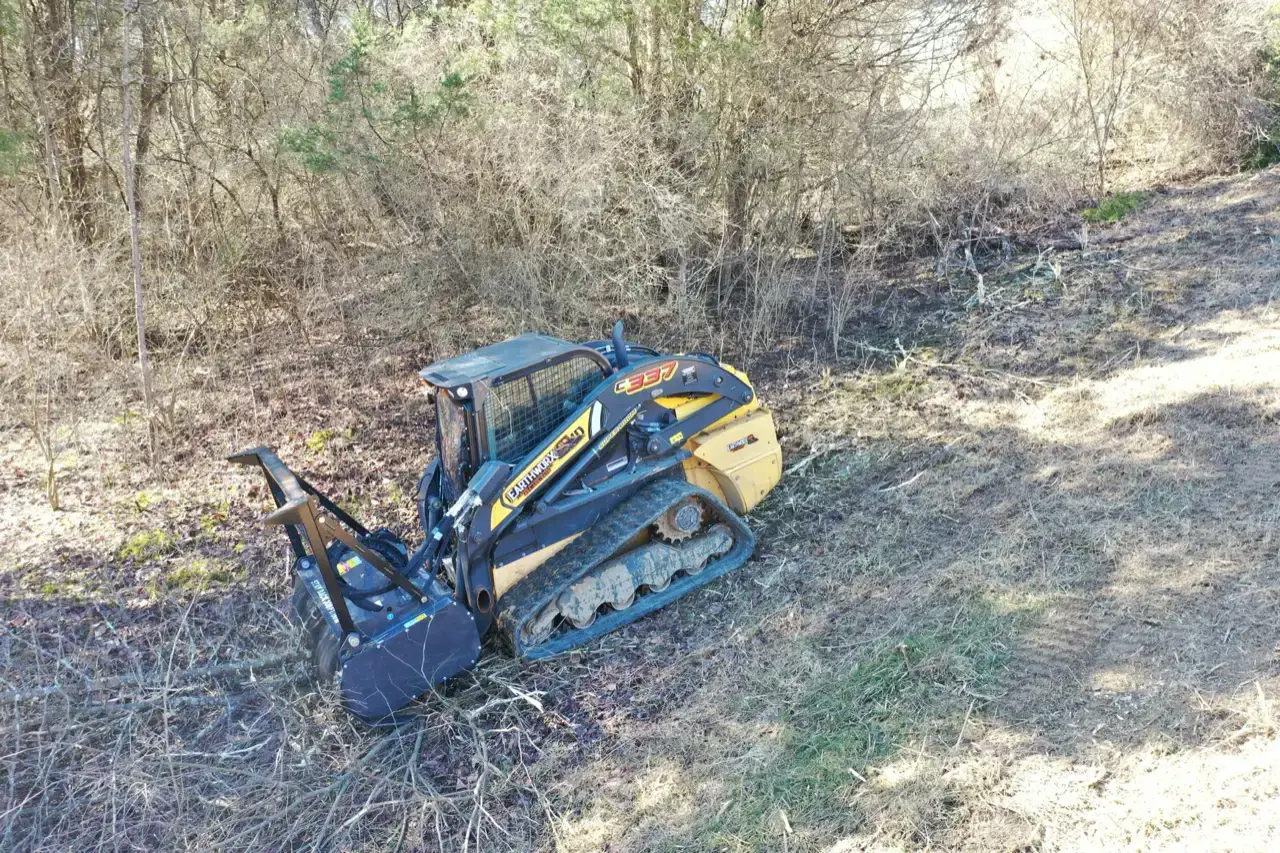
Forestry mulching uses a single machine to grind vegetation into mulch on-site, preserving topsoil and costing $1,500–$5,000 per acre. Traditional clearing uses bulldozers, excavators, and hauling trucks, costing $3,000–$8,000+ per acre total. Mulching is faster and cheaper for most jobs, but traditional clearing is better when you need stumps fully removed or bare-dirt grading.
Two Very Different Approaches to the Same Problem
We get some version of this question on almost every estimate call: "Should I mulch it or just have it bulldozed?" It is a fair question. Both methods get you from overgrown land to usable land. But how they get there, what they cost, and what your property looks like afterward are completely different.
I have been running forestry mulching equipment across Northern Kentucky for years, and I have operated alongside dozer crews on plenty of combined jobs. I am not going to pretend mulching is always the answer. It is not. But for the majority of residential and light agricultural clearing work we see in Boone, Kenton, Grant, and Campbell counties, mulching wins on cost, speed, and results.
Let me walk through the real differences so you can figure out which approach fits your situation.
What Each Method Actually Involves
Forestry Mulching
A forestry mulcher is a single machine, usually a tracked skid steer or dedicated carrier, with a high-speed rotating drum on the front. That drum has carbide teeth that grind standing trees, brush, and stumps down to ground level. Everything gets processed into wood chips and mulch right where it stood. Nothing leaves the site.
One machine, one operator. We drive in, mulch the designated area, and drive out. The ground behind us is covered in a 2–4 inch layer of organic mulch. Topsoil stays in place. Root systems below ground level are intact. No ruts if conditions are right.
Traditional Land Clearing
Traditional clearing is a multi-step, multi-machine operation. A typical sequence looks like this: a chainsaw crew drops the large trees, a bulldozer pushes the debris into windrows or piles, an excavator grubs out the stumps, trucks haul the debris to a disposal site or the piles get burned with a permit. Sometimes a grading pass follows to level things out.
You might have three to five pieces of equipment on-site plus a crew of four or more people. It is louder, more disruptive, and takes longer to set up and tear down.
The Comparison Table
| Factor | Forestry Mulching | Traditional Clearing |
|---|---|---|
| Cost per acre | $1,500–$5,000 | $3,000–$8,000+ |
| Equipment needed | 1 machine | 3–5 machines |
| Crew size | 1–2 people | 4–6 people |
| Typical speed | 1–3 acres/day | 0.5–2 acres/day |
| Topsoil preserved | Yes | No, heavily disturbed |
| Stump removal | Cut at ground level | Fully removed (grubbed) |
| Debris hauling | None, stays as mulch | Requires trucks and disposal |
| Erosion risk after | Low, mulch layer protects soil | High, bare dirt exposed |
| Max tree diameter | 8–12 inches efficiently | No practical limit |
| Site ready for building | Needs stump grinding for foundations | Yes, with grading |
| Site ready for pasture/lawn | Yes, seed directly into mulch | Yes, after topsoil replacement |
Cost Breakdown: Where the Money Goes
The sticker price on traditional clearing can sometimes look competitive with mulching on a per-acre basis. But that initial quote rarely tells the whole story.
Forestry Mulching Costs
Our mulching rates run $150–$500 per hour depending on the machine being used and the difficulty of the work. Most acre-sized jobs take 3–6 hours of actual cutting time, plus mobilization. Total per-acre cost lands in that $1,500–$5,000 range we quote everywhere, and that number includes everything. No hauling bill, no dump fees, no follow-up grading for erosion. For a full breakdown, see our forestry mulching cost guide.
What you see quoted is what you pay. The mulch stays on-site. It decomposes over 12–18 months and actually improves the soil underneath.
Traditional Clearing Costs
Traditional clearing looks like this on a typical 3-acre job in Northern Kentucky:
- Chainsaw crew to fell large trees: $800–$2,000
- Bulldozer work to push and pile: $2,000–$4,000
- Excavator for stump grubbing: $1,500–$3,000
- Debris hauling (3–6 truck loads): $1,500–$4,000
- Burn permit and management (alternative to hauling): $300–$800
- Grading to level disturbed ground: $1,000–$2,500
- Topsoil replacement if needed: $1,500–$3,000
Add those up and you are looking at $8,000–$18,000 for 3 acres, or roughly $2,700–$6,000 per acre all-in. The base clearing rate per acre might look similar to mulching, but the ancillary costs pile up fast.
I have watched landowners get a $3,000/acre quote for dozer work and think they are getting a deal compared to our $2,500/acre mulching quote. Then the hauling bill comes. Then the grading bill. Then the erosion repair bill after the first heavy rain washes a channel across their freshly exposed clay. The "cheaper" option ended up 40% more expensive.
When Forestry Mulching Wins
For the record, I am biased. We run mulching equipment and we believe in the method. But here is where it genuinely, objectively outperforms traditional clearing.
Clearing for Pasture or Agricultural Use
If you are reclaiming old farmland, mulching is the obvious choice. The mulch layer breaks down and feeds the soil. You can seed directly into it. The root masses below ground hold the soil in place while the new grass gets established. We have mulched dozens of former tobacco and cattle properties between Grant County and Pendleton County, and the grass comes in thick within one growing season.
Traditional clearing strips the topsoil, compacts the subsoil with heavy equipment, and leaves you starting from scratch. You will need to import topsoil and spend a year building the soil back up before it supports decent pasture.
Properties with Erosion Concerns
Northern Kentucky is rolling terrain with clay soil. That combination means erosion is a constant issue. The mulch layer left behind by forestry mulching acts like an erosion blanket. Water flows over it and slows down instead of cutting channels.
We cleared a steep 2-acre hillside above a creek in Campbell County last spring. The owner was worried about runoff hitting the creek. Six months later, the mulch had matted down, fescue was growing through it, and zero erosion had occurred. That same hillside stripped bare by a dozer would have needed silt fencing, erosion blankets, and probably still would have washed.
Residential Properties Where Neighbors Exist
Mulching is a one-day, one-machine operation on most residential lots. Traditional clearing means multiple trucks, equipment trailers blocking the road, chainsaw noise for days, burning smoke drifting into the neighborhood, and heavy machinery tearing up the shared road surface.
We have done plenty of 1-acre clearing jobs in subdivisions around Florence, Hebron, and Independence where the property backs up to other homes. One mulcher in and out in half a day is a lot more neighbor-friendly than a week-long clearing operation.
Invasive Species Management
Honeysuckle, autumn olive, bush honeysuckle, Bradford pear, multiflora rose. These invasive species are everywhere in Northern Kentucky. Mulching grinds them down and covers the root crowns with a thick layer of mulch that suppresses regrowth. Combined with a targeted herbicide application 6–8 weeks later, mulching is the most effective way to knock back invasive colonies at scale.
A dozer just pushes them into a pile. The root systems stay intact in the soil. They resprout within weeks.
When Traditional Clearing Wins
I said I would be honest about this, and I meant it. There are situations where calling a dozer crew is the right move.
Building Pad Preparation
If you are building a house, barn, or commercial structure and need a flat, compacted, stump-free building pad, traditional clearing with an excavator is necessary. Forestry mulching cuts stumps at ground level, but building foundations need stumps removed 12–18 inches below grade. You cannot pour a footer over a buried stump.
On jobs where the landowner is clearing for construction, we sometimes recommend a hybrid approach: we mulch the majority of the property for erosion control and aesthetics, and the excavator crew handles just the building pad area. That saves money compared to bulldozing the whole site.
Heavy Rock Removal
Some properties in the Cincinnati area and along the Ohio River have significant limestone deposits near the surface. If you need rock removed or broken up as part of the clearing process, that is excavator and breaker work. A mulching head does not process rock. We can mulch the vegetation off the top of rocky ground, but the rock itself stays where it is.
Mature Timber Stands
If your property has valuable hardwood timber over 14–16 inches in diameter, you should have it selectively logged before any clearing. A timber buyer will pay you for walnut, white oak, and cherry. Then we come in and mulch the remaining brush and smaller trees. Trying to mulch 20-inch oak trees is slow, hard on equipment, and wastes valuable wood.
Complete Site Grading
When the end goal is a perfectly smooth, bare-dirt surface, graded to specific elevations for drainage, traditional clearing with finish grading is the only option. Mulching leaves an uneven natural surface with a mulch layer. That is fine for pasture, trails, and general land use. It is not fine for a parking lot or a building site that needs precise grading.
Environmental Impact
This is where mulching has a significant advantage that does not always show up in the price comparison.
Traditional clearing exposes bare soil. In our region, that means clay. Clay that sits exposed during a rainstorm sends sediment into every downhill waterway. The Kentucky Division of Water has gotten more serious about stormwater and sediment runoff over the past decade. On properties near creeks or in watersheds with TMDL restrictions, exposed soil from clearing can trigger regulatory issues.
Mulching keeps the ground covered. The root systems hold the soil. The mulch layer filters runoff. From a regulatory standpoint, it is a much simpler operation. We have had several jobs where the county planning office specifically recommended mulching over traditional clearing because of proximity to streams.
Speed Comparison
On a typical 2–3 acre residential clearing job in our area, here is what the timeline looks like:
- Forestry mulching: 1–2 days on-site, same day cleanup (nothing to clean up), property usable immediately
- Traditional clearing: 3–5 days for clearing and grubbing, 1–2 days for debris hauling or burn management, 1 day for grading, 1–2 weeks for the burn pile to fully cool if burning. Total elapsed time: 2–3 weeks.
If you are on a deadline, say a closing date or a construction start, mulching gets you there faster. No question about it.
Our Recommendation for Most Northern Kentucky Properties
For 80% of the clearing work we see in Boone, Kenton, Grant, and Campbell counties, forestry mulching is the better option. It is cheaper all-in, faster, better for the soil, better for the neighbors, and produces a result that most landowners are happy with.
The other 20% involves construction site prep, significant grading needs, or very large timber that should be logged first. For those jobs, we either refer out to a trusted dozer operator or handle it as a combined approach with mulching on the majority of the property and excavation on the building footprint.
If you are not sure which method fits your project, that is exactly what the site visit is for. We will walk your property, talk about your goals, and tell you straight which approach makes sense. Request a free estimate and we will help you decide. Sometimes that means telling you to hire someone else for part of the job. We would rather give you honest advice than push a service that does not fit.
Related Services
We Serve These Areas
Forestry Mulching vs. Traditional Land Clearing: Which Is Better for Your Property? FAQ
Yes, for most jobs. Forestry mulching runs $1,500–$5,000 per acre all-in. Traditional clearing may quote a similar base rate per acre, but hauling, disposal, grading, and topsoil replacement can push total costs to $3,000–$8,000+ per acre. Mulching eliminates those secondary costs entirely.
Forestry mulching grinds stumps to at or just below ground level. It does not remove the root ball. For pasture, trails, or general land use, this is sufficient. For building foundations or concrete slabs, you will need a stump grinder or excavator to remove stumps 12–18 inches below grade.
You can build on mulched land, but the specific building pad area will need stump grinding below grade and likely grading before foundation work. The rest of the property can remain mulched. Many customers use a hybrid approach: mulching for the majority of the lot and excavation only for the building footprint.
In Northern Kentucky, forestry mulch typically decomposes 60–80% within 12–18 months. The rate depends on wood species, mulch thickness, temperature, and moisture. You can seed grass directly into the mulch layer within weeks of clearing, and most properties show full grass coverage within one growing season.
Forestry mulching has a lower environmental impact. It preserves topsoil, prevents erosion with the mulch layer, keeps root systems intact, returns organic matter to the soil, and eliminates the emissions from debris hauling and burning. Traditional clearing exposes bare soil, destroys topsoil structure, and often causes sediment runoff into nearby waterways.
Ready to Get Started?
Free on-site estimates for all properties in our service area.
Ready to Clear Your Land?
Get a free, no-obligation estimate for your project. We respond fast and show up on time.
Try our cost calculator · Serving Northern Kentucky, Greater Cincinnati, and Southeast Indiana · 24/7 — Emergency Service Available