
Forestry Mulching for Kentucky Farms: Reclaim Overgrown Pasture and Fence Lines
Kentucky pasture shrinks every year you don't fight it. Forestry mulching reclaims overgrown fence lines and fields faster than bush hogging and with longer-lasting results.
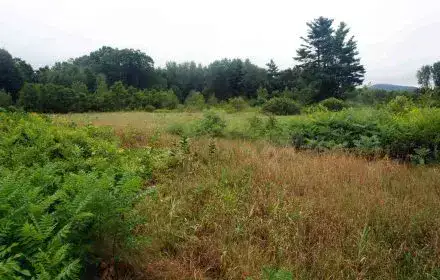
Forestry mulching reclaims overgrown Kentucky pasture at $1,500–$3,500 per acre, depending on vegetation density. It handles trees, brush, and invasive species that bush hogging cannot. Fence line clearing runs $3–$8 per linear foot. Results last 3–5 years compared to annual bush hogging. Best done in late fall or winter when the ground is firm.
The Kentucky Farm Problem Nobody Wants to Talk About
Every cattle farmer and hay producer in Northern Kentucky knows this reality: you lose ground to the woods every year. It happens slow enough that you don't notice it season to season, but compare your pasture now to what it was ten years ago. The fence lines have disappeared into honeysuckle and autumn olive. The tree line has crept 20, 30, 50 feet into what used to be productive grazing. That back field you stopped cutting because the bush hog couldn't handle it? It's young woods now.
We work on farms across Grant County, Pendleton County, Harrison County, and into the Bluegrass region. The story is the same everywhere: there aren't enough hours in the day to keep up with the brush, the bush hog can only do so much, and every year the usable pasture gets a little smaller.
Forestry mulching is the reset button. Not a permanent solution — nothing is — but it takes you back 15 years in a single day.
What Forestry Mulching Does That Bush Hogging Can't
Let me be direct about this, because a lot of farmers figure a heavy bush hog can handle anything.
A bush hog cuts grass and light brush at ground level. It's a mowing tool. It works great for what it's designed to do — maintaining open fields with grass and weeds.
But bush hogging cannot:
- Cut trees over 2–3 inches in diameter
- Remove established honeysuckle with woody stems
- Clear multiflora rose thickets
- Handle autumn olive, privet, or cedar stands
- Grind stumps so they don't resprout
Forestry mulching grinds everything — brush, saplings, trees up to 8–10 inches, invasive species thickets — down to ground level or below. The vegetation is turned into a mulch layer that stays on the ground. No burn piles, no hauling, no bare dirt.
| Factor | Bush Hogging | Forestry Mulching |
|---|---|---|
| Max tree diameter | 2–3" | 8–10" |
| Handles invasive thickets | No | Yes |
| Stump treatment | Cuts above ground, resprouts | Grinds below ground |
| Results last | 3–6 months | 3–5 years |
| Cost per acre | $100–$300 | $1,500–$3,500 |
| Ground disturbance | Minimal | Minimal |
Yes, mulching costs more upfront. A lot more. But here's the math that matters: bush hogging a 5-acre overgrown field twice a year at $200/acre costs you $2,000 annually. In five years that's $10,000, and the field is still overgrown because the bush hog never killed the woody stuff. Mulching that same 5 acres once for $8,000–$12,000 gives you clean pasture that stays productive for years with just normal mowing maintenance.
Fence Line Clearing
This is probably the most common farm job we do. Fence lines in Kentucky get swallowed by vegetation in 3–5 years if you don't stay on top of them. Honeysuckle and multiflora rose love fence rows because birds sit on the wire and drop seeds.
Once the growth gets into the wire, you've got a mess. Trees grow through the fence, vines pull it down, posts rot because they're shaded and holding moisture. Fixing the fence means clearing the growth first, and by hand that's a miserable, slow job.
We run our mulcher along fence lines and clear a path 8–15 feet wide on one or both sides. The mulcher grinds everything up to the fence posts without damaging the wire (if there's still usable wire in there). Often the fence is too far gone and needs replacing, but at least you can see it and get to it.
Fence line clearing costs: $3–$8 per linear foot depending on vegetation density. A quarter-mile fence run (1,320 feet) with heavy growth might run $5,000–$8,000. Lighter growth drops to $3,000–$5,000.
Pasture Reclamation: What to Expect
When we reclaim overgrown pasture, here's the process.
Assessment. We walk the field with you and determine what's growing. Old tobacco fields in Grant County that have been idle since the early 2000s tend to be full of cedar, autumn olive, and mixed hardwood saplings. Former cattle pasture in Pendleton County is more likely to be honeysuckle, multiflora rose, and locust.
Mulching. We run the mulcher across the field, making overlapping passes. Dense areas get multiple passes. The goal is to grind everything down to a layer of mulch at or below ground level.
What's left. After mulching, you have open ground covered in 2–4 inches of wood chip mulch. The terrain underneath is the same as before — we don't grade or level during mulching. If there were old furrows or low spots, they're still there. The mulch layer breaks down over 6–12 months depending on the material.
Getting the Pasture Back into Production
You can't just mulch and walk away if you want productive pasture. The next steps matter.
- Herbicide treatment (6–8 weeks after mulching). Invasive species resprout from the roots. Autumn olive and honeysuckle are the worst offenders. A targeted herbicide application when the new sprouts are 6–12 inches tall kills the root systems. Skip this step and you'll be mulching again in 2–3 years.
- Soil test. Kentucky Extension Service does these for about $10 per sample. Most former pasture in NKY is acidic and low in phosphorus. You'll probably need lime and fertilizer before seeding.
- Seeding. For hay or grazing, Kentucky 31 tall fescue is still the standard in our area. Orchardgrass and clover mixes are popular for rotational grazing operations. Best seeding window is mid-August through mid-October for cool-season grasses.
- Patience. A newly seeded pasture needs a full growing season before heavy grazing. Don't put cattle on it the first year.
Best Time to Mulch Farm Ground
Late fall and winter (November through February) is the best time for farm mulching. The reasons are practical:
- Frozen or dry ground means the mulcher doesn't rut the field. NKY clay soil in March is a bog.
- No leaves means better visibility. We can see every stem and fence post.
- Livestock are in the barn or on winter pasture, so we don't have to work around cattle.
- We're less booked, so scheduling is easier and we can take on larger projects.
- Mulch has all winter and spring to start decomposing before you seed in fall.
Summer mulching works but the ground is often too dry and hard, which is actually fine for the machine but tough on mulcher teeth. The real problem with summer is that every farmer calls us at the same time construction homeowners do, and we're stretched thin.
Cost Per Acre for Farm Mulching
Farm jobs are usually cheaper per acre than residential work for a simple reason: the acreage is larger, access is easier, and there are fewer obstacles.
| Vegetation Type | Cost Per Acre |
|---|---|
| Light regrowth (3–5 year idle) | $1,200–$2,000 |
| Medium brush, small cedars, invasives | $2,000–$3,000 |
| Heavy growth, trees to 8" | $3,000–$4,500 |
| Mixed hardwoods 8–12"+ | $4,000–$5,500 |
These are prices for 5+ acre jobs. Smaller parcels (under 3 acres) will be higher per acre because mobilization costs spread over less ground.
We've reclaimed 40-acre tracts in Grant County for under $2,000 per acre because the vegetation was relatively light and the terrain was flat. We've also done 5-acre hillside pastures in Pendleton County that ran over $4,000 per acre because of steep slopes and dense cedar stands. The site visit is where you get a real number.
The Timber Question
If your overgrown pasture has mature hardwood trees — walnut, white oak, red oak — with trunks over 12 inches, you might have timber value. A logger will pay you for those trees, and then we come in and mulch the remaining brush and small stuff.
This is common in our area. A farmer has a 15-acre field that's been growing up for 20 years and now has a mix of mature walnut and oak scattered among thick undergrowth. The right sequence is: logger first, mulcher second. You get paid for the timber and then pay us to clean up the rest.
We don't do logging, but we know several reputable loggers in the area and can point you in the right direction. Get the timber cruised before you mulch — once it's ground up, that value is gone.
Invasive Species: The Real Enemy
I'll be blunt about this because it matters for Kentucky farmers. Autumn olive, bush honeysuckle, multiflora rose, and Bradford pear are eating Kentucky farmland alive. These species colonize open ground fast, grow aggressively, and outcompete native grasses and pasture species.
Mulching kills the top growth. It does not kill the root systems of most invasive species. You MUST follow up with herbicide treatment, or the invasives come back. This isn't optional — it's the difference between reclaiming your pasture and spending money for a two-year break.
Your county Extension agent can recommend specific herbicides and application timing for the species on your property. In Grant County, the Extension office has been fighting autumn olive for years and has good protocol recommendations.
Get Your Fields Back
Call us at (859) 710-6107 to schedule a farm visit. We'll drive the property with you, assess the vegetation, and give you a per-acre quote. Free estimate, no obligation. We've been doing farm work in Northern Kentucky long enough to know the ground, the plants, and the realistic costs.
Bring your fence line concerns too. That's half of what we do on farms, and it's usually where the biggest quality-of-life improvement happens. Being able to see and access your fence rows makes everything about farm management easier.
Related Services
We Serve These Areas
Forestry Mulching for Kentucky Farms: Reclaim Overgrown Pasture and Fence Lines FAQ
Farm pasture mulching in Kentucky runs $1,200–$4,500 per acre depending on vegetation density. Light regrowth on former pasture is $1,200–$2,000 per acre, while heavy growth with trees up to 8 inches costs $3,000–$4,500. Larger acreage (10+ acres) typically falls on the lower end per acre.
For truly overgrown pasture with woody growth, trees, and invasive species, forestry mulching is more effective. Bush hogging cannot handle trees over 2–3 inches or established woody invasives. Mulching results last 3–5 years versus bush hogging requiring repeat passes every few months.
You can seed immediately if the mulch layer is thin, but best results come from waiting for some decomposition. In our area, mulching in late fall or winter and seeding the following September gives the mulch time to break down and the soil time to settle. Soil test before seeding to check lime and fertilizer needs.
Mulching kills the top growth but not the root systems of most invasive species. Autumn olive, honeysuckle, and multiflora rose will resprout within weeks. A targeted herbicide application 6–8 weeks after mulching is necessary to kill root systems and prevent regrowth.
We typically clear 8–15 feet on each side of a fence line. This gives you working room for fence repair, keeps vegetation from growing back into the wire quickly, and allows sunlight to reach the fence row. Wider clearings last longer between maintenance but cost more.
Late fall through winter (November–February) is ideal. The ground is firm or frozen, preventing equipment ruts in clay soil. Livestock are off pasture, leaves are down for better visibility, and the mulch has months to decompose before fall seeding. Scheduling availability is also better in winter.
Ready to Get Started?
Free on-site estimates for all properties in our service area.
Ready to Clear Your Land?
Get a free, no-obligation estimate for your project. We respond fast and show up on time.
Try our cost calculator · Serving Northern Kentucky, Greater Cincinnati, and Southeast Indiana · 24/7 — Emergency Service Available