
Do You Need a Permit to Clear Land in Kentucky?
The short answer: usually no for rural private property. The longer answer involves floodplains, city limits, HOAs, and county-specific rules that can trip you up.
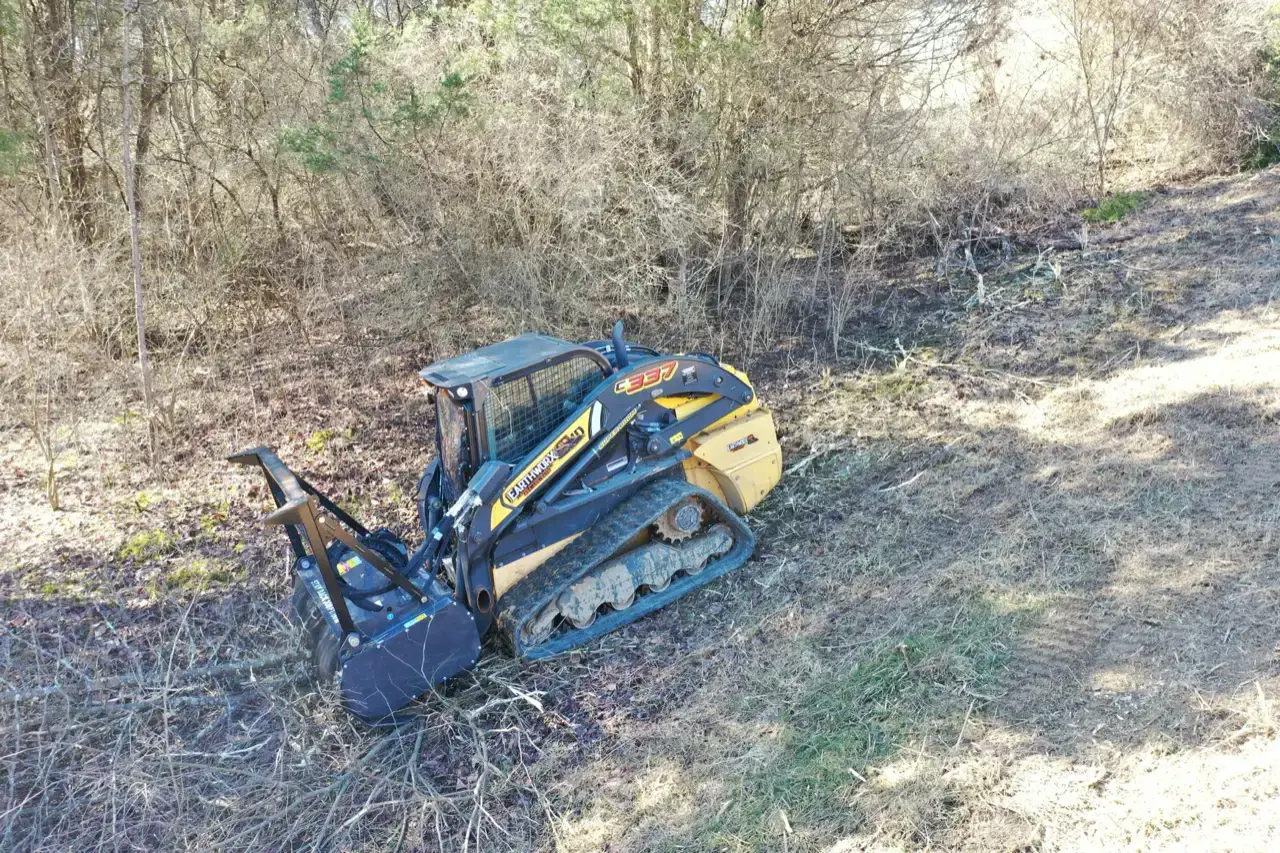
In most cases, you do not need a permit to clear land on private rural property in Kentucky. However, clearing within city limits, floodplains, wetlands, or HOA-governed communities often requires permits or approval. Boone, Kenton, and Campbell counties each have different regulations, and cities like Florence and Covington have tree ordinances that apply to certain removals.
The Short Answer
If you own rural land in Kentucky — meaning outside city limits, not in a floodplain, not in a wetland, and not governed by an HOA — you generally do not need a permit to clear vegetation on your property. Kentucky is a property-rights state, and most counties do not regulate tree removal or brush clearing on private land.
That is the answer about 70% of the people calling us want to hear. But the other 30% have situations that are more complicated. If you are in or near a city, near water, or in a planned subdivision, keep reading.
When You Definitely Do NOT Need a Permit
- Clearing brush, saplings, and small trees on private rural property
- Removing invasive species like honeysuckle, multiflora rose, or autumn olive
- Cleaning up storm damage on your own land
- Clearing for agricultural use — pasture, hay field, crop land
- Maintaining existing fence lines, property boundaries, or access roads
- Removing dead or hazardous trees on private property
If your property is in unincorporated Pendleton County, Grant County, or the rural parts of Boone County, you are almost certainly fine to clear without any permits. We do this work constantly and have never had a county official raise an issue on rural residential or agricultural land.
When You Might Need a Permit
Here is where it gets more specific.
City Limits
Properties within incorporated city limits are subject to that city's zoning and land use codes. In Northern Kentucky, this affects more properties than people realize because city boundaries have expanded over the decades.
Florence has a tree preservation ordinance that applies during development. If you are clearing a lot for a new home build, the city planning department wants to see your clearing plan as part of the building permit process. This does not apply to clearing brush on an existing residential lot, but it does affect new construction on wooded lots. We have worked with builders in Florence who had to modify their clearing footprint to preserve specific trees.
Covington has similar requirements tied to their zoning code. Clearing within the city requires a review if it is part of a development project. Residential maintenance clearing — taking down a dead tree, removing overgrown brush in your backyard — does not typically require a permit, but check with the city building department if the scope is large.
Independence and Burlington are less restrictive. Most residential clearing in these cities does not require a permit unless it is tied to new construction that triggers a building permit review.
Walton and Williamstown have minimal regulation on vegetation clearing. Small towns with rural character and straightforward approaches.
Floodplains
This is the big one that catches people off guard. If any part of your property is in a FEMA-designated floodplain, clearing vegetation in the floodplain area may require a floodplain development permit from your county or city.
The logic is that vegetation in floodplains helps slow water flow and reduce erosion during floods. Removing it can increase flood risk for downstream properties. Whether you agree with that reasoning or not, the rules are real and the fines are real.
Northern Kentucky has significant floodplain areas along the Ohio River, the Licking River, Banklick Creek, Gunpowder Creek, and their tributaries. Properties in the river bottoms of Boone, Kenton, and Campbell counties should check FEMA flood maps before clearing.
You can look up your property on FEMA's National Flood Hazard Layer map or contact your county floodplain administrator. In Boone County, that is the Planning Commission. In Kenton County, it is the Planning and Development Services department.
We have had clients discover their property was partially in a floodplain after they had already scheduled clearing. It is better to check first. The permit process is not terribly complicated, but it takes time.
Wetlands
Wetlands are federally protected under the Clean Water Act, and this is not a state-level issue — the Army Corps of Engineers has jurisdiction. Clearing vegetation in a designated wetland without a Section 404 permit is a federal violation with serious penalties.
Wetlands are not always obvious. A low area that stays damp in spring might be a jurisdictional wetland. If your property has areas that hold standing water seasonally or have cattails, sedges, or other wetland vegetation, get a determination before clearing. The Corps of Engineers Louisville District handles Kentucky.
In our experience, most properties in Northern Kentucky do not have wetland issues. But low-lying parcels along creeks and rivers are the ones to watch. A job we were hired for in Owen County had a two-acre wetland pocket in the middle of what looked like a normal field. We found out during the site walk, not after we had already mulched it.
Homeowners Associations (HOAs)
If your property is in an HOA-governed subdivision, the HOA's covenants, conditions, and restrictions (CC&Rs) may limit what you can clear. Some HOAs require approval before removing any trees over a certain diameter. Some require a landscape plan showing what you intend to plant after clearing.
This is not a government permit — it is a contractual restriction you agreed to when you bought the property. But the penalties for violating HOA rules can be just as expensive as violating a zoning code. We have had a homeowner in a Boone County subdivision get fined $5,000 by their HOA for removing mature trees from their backyard without approval.
If you are in an HOA, read your CC&Rs before you hire anyone. We will not clear a property where the landowner has not confirmed they have the right to clear.
County-by-County Breakdown
Boone County
Boone County's Planning Commission oversees zoning and floodplain management. Rural properties outside city limits have minimal restrictions on vegetation clearing. Within city limits (Florence, Union, Walton — Hebron is unincorporated), check with the relevant city.
Boone County does have a floodplain ordinance that requires permits for any development — including vegetation clearing — in mapped flood zones. Properties along Gunpowder Creek and the Ohio River bottoms are the most common areas affected.
For standard residential land clearing on rural property, no permit is needed. We clear properties in rural Boone County regularly without any permitting issues.
Kenton County
Kenton County Planning and Development Services handles zoning. Most of the county outside Covington, Erlanger, and Independence is rural with minimal clearing restrictions.
Covington is the most regulated city in the county for land clearing purposes. The older neighborhoods along the Licking River have floodplain and historic district overlay zones. If your property is in a historic district, even vegetation changes can require review.
Rural Kenton County — the areas south of Independence toward Demossville and Piner — is straightforward. Private property, minimal regulation, no permits needed for standard clearing.
Campbell County
Campbell County is split between the urban river cities (Newport, Bellevue, Dayton) and rural areas to the south and east. The urban areas have zoning codes that may affect clearing, especially near the river. The rural areas around Alexandria, California, and Melbourne have minimal restrictions.
Properties along the Licking River in Campbell County should check floodplain status. The steep terrain along the river corridors also sometimes falls under hillside development regulations in certain cities.
Grant County
Grant County is mostly rural and has the least regulatory burden on land clearing in our service area. Properties around Williamstown, Dry Ridge, and Crittenden rarely have any permitting requirements for vegetation clearing. The county does not have a standalone tree ordinance.
The only exception is properties in the floodplain along Eagle Creek, which runs through the center of the county. Check if your property is in the mapped flood zone.
State-Level Regulations
Kentucky does not have a statewide tree removal permit or vegetation clearing permit. The state defers to local jurisdictions — counties and cities — for land use regulation.
However, two state-level rules apply everywhere:
Kentucky Division of Water — If your clearing activity will disturb more than one acre of ground and could result in stormwater runoff into waters of the state, you may need a KY Pollutant Discharge Elimination System (KPDES) permit for stormwater. This is more relevant to construction projects than forestry mulching, since mulching does not expose bare soil the way grading does. But if you are clearing and then grading, the permit requirement kicks in.
Kentucky Department of Fish and Wildlife — There are no general restrictions on clearing, but if threatened or endangered species are documented on your property, federal protections may apply. This is rare for most residential and agricultural properties but can come up on larger tracts with unique habitat. Indiana bats and Virginia big-eared bats are the most common species of concern in Northern Kentucky.
Burning Regulations
This is a side topic but comes up constantly. If you are clearing land by traditional methods and plan to burn debris, Kentucky has specific rules. Open burning of land clearing debris is regulated by the Kentucky Division of Air Quality. Most counties require a burn permit, and burning is only allowed during certain seasons and weather conditions. There are also local fire department notification requirements.
Forestry mulching avoids all of this because there is nothing to burn. Everything is ground up and left on-site.
Practical Steps Before You Clear
- Check whether your property is inside city limits. County PVA or property tax records will tell you.
- Look up your property on FEMA's flood map viewer to check floodplain status.
- If you are in an HOA, read your CC&Rs regarding tree removal and land alteration.
- Call 811 for utility locates at least five business days before work begins.
- If you are clearing more than an acre and will be grading, check KPDES stormwater requirements.
- When in doubt, call your county planning commission. They will tell you in five minutes whether you need anything.
We help landowners navigate this all the time. If you are unsure about your property, schedule a free estimate and we can usually tell you during the site visit whether anything looks like a potential regulatory issue. We are not lawyers, but we know the common scenarios in every county we work in.
What Happens If You Clear Without a Permit When One Was Required
We will not sugarcoat this. Clearing in a regulated area without the proper permits can result in fines, required restoration at your expense, and complications if you try to sell the property. Floodplain violations in particular can affect your ability to get flood insurance, which can affect your ability to get a mortgage.
The likelihood of getting caught varies. In rural Grant County, realistically, nobody is checking. In Florence or Covington, a neighbor complaint or a code enforcement officer driving by can trigger an investigation. Is it worth the risk? That is your call, but the downside is real.
Bottom Line
Most land clearing on private rural property in Kentucky does not require a permit. If you are outside city limits, outside a floodplain, outside a wetland, and not in an HOA, you are almost certainly fine. But check. It takes 30 minutes to verify your property status, and it can save you thousands in fines and headaches.
When you call us, one of the first questions we ask is where the property is and whether there are any known restrictions. We are not going to clear a property that puts you or us in a regulatory bind.
Related Services
We Serve These Areas
Do You Need a Permit to Clear Land in Kentucky? FAQ
In most cases, no. Kentucky does not have a statewide tree removal permit. Private property owners in rural areas can remove trees without a permit. However, properties within city limits, floodplains, wetlands, or HOA communities may have restrictions. Check with your local planning commission.
Florence has a tree preservation ordinance that applies during new development and construction projects. If you are clearing a wooded lot for a new home build, the city planning department reviews the clearing plan as part of the building permit. Clearing brush on an existing residential lot is generally not regulated.
Yes. Clearing vegetation in a FEMA-designated floodplain typically requires a floodplain development permit from your county or city. In Northern Kentucky, the county planning commissions administer floodplain permits. Check FEMA flood maps for your property before clearing.
Yes. HOA covenants and restrictions are contractual obligations. Many HOAs in Northern Kentucky require approval before removing trees over a certain size. Violations can result in fines of several thousand dollars. Review your CC&Rs before any clearing work.
Yes. Open burning of land clearing debris in Kentucky is regulated by the Division of Air Quality, and most counties require a burn permit. Forestry mulching eliminates the need for burning entirely because all vegetation is ground into mulch and left on-site.
Ready to Get Started?
Free on-site estimates for all properties in our service area.
Ready to Clear Your Land?
Get a free, no-obligation estimate for your project. We respond fast and show up on time.
Try our cost calculator · Serving Northern Kentucky, Greater Cincinnati, and Southeast Indiana · 24/7 — Emergency Service Available