
Bradford Pear Tree Removal: Why Ohio and Kentucky Are Banning Them
The ornamental Bradford pear you planted in the 90s has gone feral. Ohio banned the sale. Kentucky followed. Here is what that means for your property.
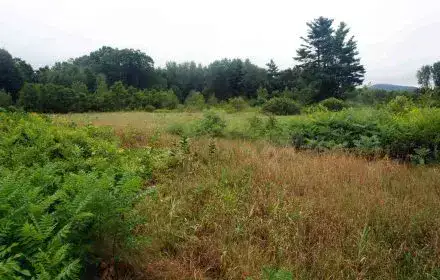
Bradford pear trees are being banned in Ohio (effective 2023) and Kentucky because they cross-pollinate and revert to invasive callery pear, producing thorny, fast-spreading trees that colonize fields and forest edges. Removal options include forestry mulching for large stands ($1,500 to $3,000 per acre) or individual tree removal for yard specimens ($200 to $800 per tree). Follow-up herbicide on stumps prevents regrowth.
From Ornamental Darling to Public Enemy
The Bradford pear was everywhere in the 1990s and 2000s. Every new subdivision in Cincinnati, Florence, and Covington had them lining the streets. They were cheap, grew fast, had pretty white flowers in spring, and turned a nice red in fall. Landscape architects and homebuilders loved them.
Then things went sideways. The ornamental Bradford pear (Pyrus calleryana 'Bradford') was supposed to be sterile. It was not. When Bradford pears cross-pollinate with other callery pear cultivars, and there are many, they produce viable seeds. Birds eat the small fruits, deposit the seeds, and what grows is not a tidy ornamental tree. It is a wild callery pear: fast-growing, loaded with 3-inch thorns, and aggressive enough to take over a field in a decade.
Drive along any highway in Northern Kentucky between March and early April and look for the white-flowering trees in the tree line and along field edges. Those are feral callery pears. They are everywhere. And every one of them came from an ornamental Bradford pear in somebody's yard.
The Ohio and Kentucky Bans
Ohio banned the sale of callery pear (all cultivars, including Bradford) effective January 2023. Nurseries can no longer sell them. The ban does not require you to remove existing trees from your property, but it signals how serious the problem has become.
Kentucky followed with similar restrictions. The Kentucky Invasive Plant Council lists callery pear as a severe invasive threat, and state-funded projects now include callery pear removal as a priority.
Neither state is sending inspectors to your yard. Nobody is going to fine you for having a Bradford pear in front of your house. But if you are thinking about what to do with aging Bradford pears on your property, the direction is clear. They are on the way out, and there are good reasons to remove them sooner rather than later.
Why Bradford Pears Are a Problem Beyond Your Yard
A single mature Bradford pear in a suburban yard can produce thousands of fruits per year. Each fruit contains seeds. Birds, especially starlings, cedar waxwings, and robins, spread those seeds across a wide area. The resulting wild callery pears share none of the ornamental qualities that made Bradford pears popular.
- Thorns: Wild callery pears have rigid thorns up to 3 inches long. They puncture tires, boot soles, and skin.
- Growth rate: A callery pear seedling in full sun can grow 6 to 8 feet in a single year.
- Density: They grow in clusters, and a single field edge can fill with hundreds of stems in five years.
- Root sprouting: When cut, they sucker from the roots, producing multiple new stems.
- Structural weakness: Bradford pears are notorious for splitting in storms due to their tight branch angles. The feral versions are even worse.
In the farming areas of Boone and Grant County, we see callery pear colonizing fence rows, pasture edges, and old tobacco ground that has been left idle. Once they get chest-high, mowing cannot handle them. The thorns shred mower tires and the trunks are too thick for a bush hog.
How to Identify Feral Callery Pear
In spring, this is easy. They are the first trees to bloom white, usually in late March before most native trees have leafed out. A hillside dotted with white-flowering trees in early spring is almost certainly infested with callery pear.
The rest of the year, look for these features:
- Leaves: Glossy, dark green, oval with scalloped edges. They hold their leaves later into fall than most native species.
- Bark: Gray-brown, develops a distinctive crisscross pattern with age.
- Thorns: Present on feral and escaped specimens. Original Bradford cultivars usually lack significant thorns, but the wild offspring have them.
- Fruit: Small, round, hard, brownish. About the size of a marble. Persistent through winter until birds eat them.
Removal Methods
Forestry Mulching for Large Stands
When callery pear has colonized a field edge, pasture, or woodlot, individual tree removal does not make sense. You might have hundreds of stems across multiple acres. Forestry mulching handles this efficiently.
The mulcher grinds callery pear stems, trunks, and root crowns into chips. Trees up to 8 inches in diameter go through the drum at normal speed. Larger stems up to 10 to 12 inches take a slower approach with multiple passes. The thorns that make hand work dangerous do not affect the machine.
We mulched a 5-acre field border in Boone County last spring that had filled with callery pear over about 8 years. The trees ranged from seedlings to 8-inch trunks. The job took two days, and the field edge went from an impenetrable thorny mess back to usable ground.
Cost for mulching callery pear stands runs $1,500 to $3,000 per acre depending on stem density and diameter. This is in line with standard mulching rates because the wood is not particularly hard and the stems are usually under 8 inches.
Individual Tree Removal for Yard Specimens
If you have Bradford pears in your front yard or along your driveway, a forestry mulcher is overkill. Individual tree removal by a tree service or arborist is the better approach.
Expect to pay $200 to $800 per tree depending on size and location. A 30-foot Bradford pear near a house costs more to remove than the same tree in an open yard because of the rigging and precautions needed to protect structures.
After removal, treat the stump with herbicide immediately. Callery pear stumps sucker aggressively. A stump left untreated can produce a dozen or more shoots within weeks. Apply triclopyr or glyphosate to the fresh-cut stump surface the same day the tree comes down.
Stump Treatment Is Not Optional
This is the part we really want to emphasize. Whether you mulch or cut, callery pear will try to come back. The root system sends up suckers from the stump and from lateral roots. We have seen mulched callery pear fields produce hundreds of new sprouts within two months.
Herbicide follow-up on the resprouts is the same approach as with autumn olive: wait for resprouts to reach 12 to 18 inches, then apply triclopyr or glyphosate as a foliar spray. One to two follow-up treatments over the first year typically finishes the job.
For individual stumps in a yard, applying concentrated herbicide to the stump surface within an hour of cutting gives the best results. The fresh-cut wood absorbs the chemical and moves it into the root system.
What to Plant Instead
If you are removing Bradford pears and want replacements, here are native alternatives that do well in our area:
- Serviceberry (Amelanchier): White spring flowers, edible berries, nice fall color. Similar size to Bradford pear at maturity.
- Eastern redbud (Cercis canadensis): Pink-purple spring flowers. Native to Kentucky. Smaller than Bradford pear, good for yards.
- Flowering dogwood (Cornus florida): The classic native flowering tree. Prefers partial shade.
- Blackgum (Nyssa sylvatica): Brilliant fall color, good wildlife tree, tolerates wet ground.
- White oak (Quercus alba): If you have room for a large tree and patience. Majestic at maturity.
The Kentucky Division of Forestry occasionally runs native tree seedling giveaway programs. Check with your county extension office. Some programs specifically target Bradford pear replacement, offering free native seedlings to property owners who remove callery pears.
The Timeline for Property Owners
If you have Bradford pears on your residential property, you are not under any legal obligation to remove them today. The ban applies to nursery sales, not existing trees.
But Bradford pears typically live 15 to 25 years before they start splitting apart in storms. If yours are already 20 years old and showing split crotches, you are on borrowed time for storm damage. Proactive removal on your schedule costs less and causes less damage than an emergency crew cleaning up a tree that fell on your roof during an ice storm.
For farmland or acreage where feral callery pear is spreading, the sooner you act the cheaper the removal. A field edge that has 2-inch seedlings this year will have 6-inch trees in three years. Mulching 2-inch stems is fast and cheap. Mulching 6-inch trunks takes twice as long and costs accordingly.
EarthWorx removes callery pear and Bradford pear across the Florence, Cincinnati, and Northern Kentucky area. We handle everything from single-acre field edges to multi-acre farmland reclamation projects.
Related Services
We Serve These Areas
Bradford Pear Tree Removal: Why Ohio and Kentucky Are Banning Them FAQ
No. Ohio banned the sale of Bradford pear and all callery pear cultivars effective January 2023, but the ban does not require removal of existing trees on private property. You will not be fined for having one. However, arborists and land managers recommend removal because the trees spread invasive offspring.
Bradford pears cross-pollinate with other callery pear cultivars, producing viable seeds. Birds spread these seeds, and the resulting wild trees are thorny, fast-growing, and aggressive. They colonize fields, fence rows, and forest edges, displacing native plants.
Individual Bradford pear removal costs $200 to $800 per tree depending on size and location. For feral callery pear stands on larger properties, forestry mulching costs $1,500 to $3,000 per acre. Stump treatment with herbicide is an additional cost but is necessary to prevent regrowth.
Good native replacements include serviceberry (similar white flowers), eastern redbud (spring color), flowering dogwood, blackgum (fall color), and white oak (if space allows). The Kentucky Division of Forestry sometimes offers free native seedlings for Bradford pear replacement programs.
Yes. Callery pear stumps sucker aggressively from the root crown and lateral roots. An untreated stump can produce a dozen or more new shoots within weeks. Apply triclopyr or glyphosate to the fresh-cut stump surface within an hour of cutting to prevent regrowth.
Ready to Get Started?
Free on-site estimates for all properties in our service area.
Ready to Clear Your Land?
Get a free, no-obligation estimate for your project. We respond fast and show up on time.
Try our cost calculator · Serving Northern Kentucky, Greater Cincinnati, and Southeast Indiana · 24/7 — Emergency Service Available