
Autumn Olive Removal: Getting Rid of Northern Kentucky's Worst Invader
Autumn olive is the single most aggressive invasive shrub in Northern Kentucky. Here is what actually works to get rid of it and what just wastes your time.
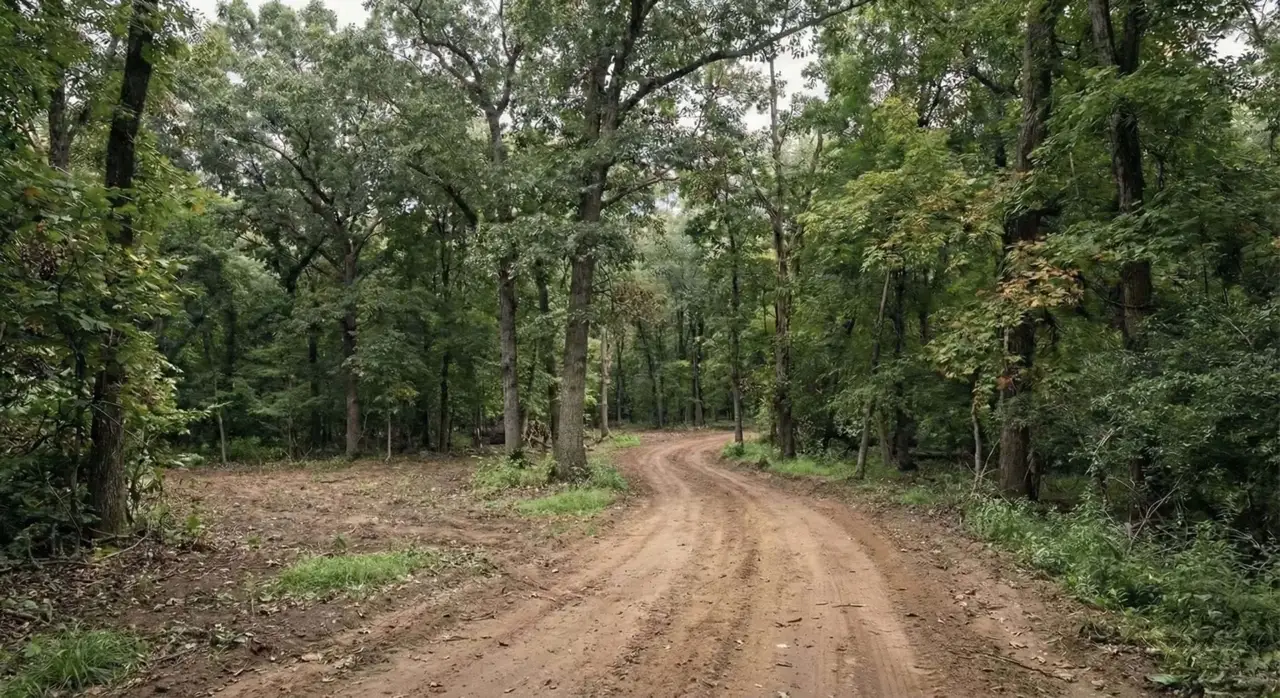
Autumn olive removal requires grinding the plant to ground level with a forestry mulcher or cutting it down, then applying a targeted herbicide (triclopyr or glyphosate) to the stump or regrowth within 6 to 8 weeks. Cutting alone fails because autumn olive resprouts aggressively from the root crown. For large infestations, forestry mulching at $1,500 to $3,500 per acre plus follow-up herbicide treatment is the most effective approach.
The Plant That Took Over Kentucky
If you own property in Boone, Grant, Kenton, or Campbell County and you have even a quarter acre of untended ground, you probably have autumn olive growing on it. It is that common. The silvery-green leaves and red berries look harmless enough, but this plant has taken over more Northern Kentucky pastures, fence rows, and woodlots than any other invasive species we deal with.
Autumn olive (Elaeagnus umbellata) was originally planted on purpose. The USDA recommended it for erosion control and wildlife habitat from the 1950s through the 1980s. It fixes nitrogen in the soil, grows fast, and produces berries that birds love. That last part turned out to be the problem. Birds eat the berries and deposit seeds everywhere. One mature autumn olive plant produces hundreds of thousands of seeds per year, and those seeds stay viable in the soil for years.
The result is what you are looking at right now. Dense thickets that shade out native plants, crowd fence lines, and turn open pasture into scrubland within five to ten years.
How to Identify Autumn Olive
Before you start removing anything, make sure you are actually dealing with autumn olive and not native plants that look similar.
- Leaves: Oval, 2 to 4 inches long, dark green on top with a distinctive silvery-white underside. Turn a leaf over. If it sparkles in the sunlight, it is autumn olive.
- Bark: Gray-brown and smooth on young stems, becoming rough and shreddy on older trunks.
- Berries: Small, round, red with silver speckles. Ripen in September and October. Birds go after them immediately.
- Thorns: Some branches have short, stiff thorns. Not every branch, but enough to scratch you up when working in a thicket.
- Growth habit: Multi-stemmed shrub, typically 6 to 20 feet tall. In open sunlight it grows wide and bushy. In shade it stretches upward looking for light.
If you have a plant with silvery undersides on the leaves and red speckled berries in fall, it is autumn olive. Nothing native in our area matches both of those features.
Why Cutting Alone Does Not Work
This is the mistake we see over and over. A property owner goes out with a chainsaw or brush cutter, spends a weekend cutting autumn olive to the ground, and feels great about the progress. Six weeks later, every single stump has sent up a cluster of new shoots. By the end of that same growing season, those shoots are three to five feet tall.
Autumn olive stores massive energy reserves in its root system. When you cut the top off, you remove the canopy but leave the engine running. The root crown responds by sending up even more stems than the plant had before. A single-stemmed autumn olive that you cut becomes a multi-stemmed bush with ten or fifteen new shoots. You made the problem worse.
We see this repeatedly on properties in Grant County and northern Boone County where landowners have been fighting autumn olive for years. They cut it every spring. It grows back every summer. They cut it again. It grows back again. Each cycle makes the root system larger and more resilient.
What Actually Works: Mulching Plus Herbicide
The approach that we have found most effective across hundreds of acres of autumn olive removal combines two steps: mechanical removal and chemical follow-up. Neither one alone does the job. Together, they get a kill rate above 90% in the first treatment.
Step 1: Forestry Mulching
A forestry mulcher grinds autumn olive plants down to ground level or slightly below. The rotating drum shreds the stems, branches, and root crown into wood chips. Unlike a chainsaw cut that leaves a clean stump surface, mulching shreds and tears the stump, which disrupts the plant's ability to resprout as quickly. The mulch layer that gets deposited over the stump also blocks some sunlight from reaching new shoots.
On a dense autumn olive thicket, our mulcher clears about one to two acres per day. Lighter infestations where autumn olive is mixed in with other brush go faster. A solid wall of nothing but autumn olive, which we see regularly along I-75 in Grant County and along the back edges of farms in Boone County, takes more time because the stems are packed tight and the machine has to work harder.
Step 2: Herbicide Treatment (6 to 8 Weeks Later)
After mulching, we wait. This is the part people want to skip, but it matters. You need the root crown to push out new growth so there are active leaves to absorb herbicide. If you spray bare ground right after mulching, you are wasting chemical.
Six to eight weeks after mulching, the stumps will have resprouted. Those new shoots are small, soft, and actively growing. That is the window. A foliar spray of triclopyr (sold as Garlon or Crossbow) or glyphosate (Roundup) at the label rate hits those new leaves and translocates down into the root system. The plant pulled all its reserves into producing those shoots, and now the herbicide rides the same pathway back down to the roots.
For smaller areas, cut-stump treatment works too. You cut the resprout and immediately paint the fresh cut surface with concentrated herbicide. This is labor-intensive but precise. We use it on autumn olive growing near desirable trees where foliar spray would cause drift damage.
- Foliar spray: Best for large areas. Use triclopyr at 2% solution or glyphosate at 3% solution with a surfactant. Spray to wet, not to drip.
- Cut-stump treatment: Best near sensitive areas. Use triclopyr at 25% concentration or glyphosate at 50% concentration applied to the fresh-cut surface within 15 minutes.
- Basal bark treatment: For stems under 6 inches. Apply triclopyr in oil carrier directly to the bark around the base of the stem. Works year-round.
Timing Matters
The best window for autumn olive removal in Northern Kentucky is late spring through early summer, roughly May through July. Here is why.
Mulching in late spring catches the plants in active growth when they have fully leafed out and committed their energy reserves to canopy production. The root reserves are at their lowest point of the year. When you knock the top off during this window, the plant has the hardest time recovering.
The follow-up herbicide treatment then falls in mid to late summer, when the resprouts are actively growing and the plant is trying to store energy for winter. Herbicide applied during this active growth phase gets the best translocation to the roots.
Mulching in winter works fine mechanically. The frozen ground means less rutting and the machine runs well. But the follow-up herbicide window gets pushed to the following spring, which means the root system has all winter to rebuild its energy reserves. The kill rate on winter-mulched autumn olive with spring herbicide follow-up runs about 70 to 80%. Summer timing gets us above 90%.
What to Expect Cost-Wise
We get asked this on every autumn olive job, so here are the real numbers for Northern Kentucky.
| Infestation Level | Mulching Cost Per Acre | Herbicide Follow-Up Per Acre | Total Per Acre |
|---|---|---|---|
| Light (scattered plants mixed with other brush) | $1,500-$2,500 | $200-$400 | $1,700-$2,900 |
| Moderate (patches and clusters) | $2,000-$3,000 | $300-$500 | $2,300-$3,500 |
| Heavy (solid thicket, stem-to-stem) | $2,500-$3,500 | $400-$600 | $2,900-$4,100 |
These numbers assume relatively flat ground with decent access. Steep terrain or long-distance machine travel from the road adds to the cost. Properties where we have to cut an access path first will run higher than the table shows.
The herbicide follow-up can be done by the property owner to save money. A backpack sprayer and a jug of Crossbow from the farm supply store runs about $50 for enough chemical to treat an acre. The application is straightforward, just walk the mulched area and spray any green resprouts. We offer it as a service for people who do not want to handle herbicide themselves.
Will It Come Back?
Honestly, some will. Even with a 90%+ kill rate on the existing plants, autumn olive seeds in the soil remain viable for years. You will see new seedlings pop up for two to three seasons after treatment. But seedlings are easy to pull by hand or spot-spray. They are not the same problem as a mature root system resprouting.
The key is monitoring. Walk the cleared area two or three times during the growing season for the first two years. Pull or spray any new growth you see while it is small. After two to three years, the seed bank in the soil is mostly exhausted and new growth slows to nearly nothing.
Planting native species in the cleared area also helps. Once native grasses and shrubs establish, they compete with autumn olive seedlings for light and space. Eastern red cedar, which is native to our area, actually does well in former autumn olive sites. So does native warm-season grass if you seed it properly.
When to Call a Professional
If your autumn olive problem is a few scattered bushes along a fence line, you can handle it yourself with a chainsaw and herbicide. That is a weekend project.
If you are looking at a quarter acre or more of solid autumn olive, especially on hilly ground or along a property boundary where access is difficult, that is when professional mulching makes sense. The machine does in a day what would take a crew with chainsaws a week. And you avoid the mountain of brush that has to go somewhere.
EarthWorx handles autumn olive removal across Northern Kentucky, from the river bottoms in Boone County up through the farm country in Grant County. Request a free estimate — we can usually get out for a site walk within a week of your call, and most autumn olive jobs fit into our schedule within two to three weeks after that.
Related Services
We Serve These Areas
Autumn Olive Removal: Getting Rid of Northern Kentucky's Worst Invader FAQ
Autumn olive stores large energy reserves in its root system. Cutting removes the top growth but leaves the root crown intact. The plant responds by sending up multiple new shoots from the root crown, often more than it had before. Effective removal requires killing the root system with herbicide after cutting or mulching.
Triclopyr (sold as Garlon or Crossbow) and glyphosate (Roundup) are both effective. For foliar spray on resprouts, use triclopyr at 2% or glyphosate at 3% with a surfactant. For cut-stump treatment, use higher concentrations applied directly to the fresh-cut surface. Always follow label directions.
Late spring through early summer (May through July) is the best window. The plants are in active growth, root reserves are at their lowest, and the follow-up herbicide treatment falls during peak growing season when translocation to the roots is most effective.
In Northern Kentucky, autumn olive removal by forestry mulching runs $1,500 to $3,500 per acre for the mulching, plus $200 to $600 per acre for herbicide follow-up. Total cost per acre is typically $1,700 to $4,100 depending on density and terrain.
Yes. Autumn olive is listed as an invasive species in Kentucky. It was originally planted for erosion control but has escaped cultivation and now dominates fence rows, forest edges, pastures, and disturbed ground across Northern Kentucky. A single plant produces hundreds of thousands of seeds per year, spread primarily by birds.
Ready to Get Started?
Free on-site estimates for all properties in our service area.
Ready to Clear Your Land?
Get a free, no-obligation estimate for your project. We respond fast and show up on time.
Try our cost calculator · Serving Northern Kentucky, Greater Cincinnati, and Southeast Indiana · 24/7 — Emergency Service Available